

Aftercare: Navigating the Options for Transitioning Out of Foster Care
Contributed by Speak Up for Kids Student Intern Team — This article was developed through the combined efforts of multiple student interns, each bringing unique skills and perspectives to support life skills education for foster youth.
Overview
Transitioning out of foster care can be overwhelming, especially for young adults who are suddenly expected to navigate independence without consistent support. Recognizing these challenges, the Florida State Legislature has taken meaningful steps to expand resources for foster youth aging out of the system. Recent updates to state law now offer greater flexibility, longer-term assistance, and broader eligibility for programs designed to support young adults as they move toward stability and self-sufficiency.
Nancy C. Detert Act
Recent legislation passed by the Florida State Legislature has expanded resources available to foster children as they transition out of the foster care system. The Nancy C. Detert Common Sense and Compassion Independent Living Act now allows foster children to remain in the system until they reach ages 21 or 22.
Understanding EFC, PESS, and Aftercare Options
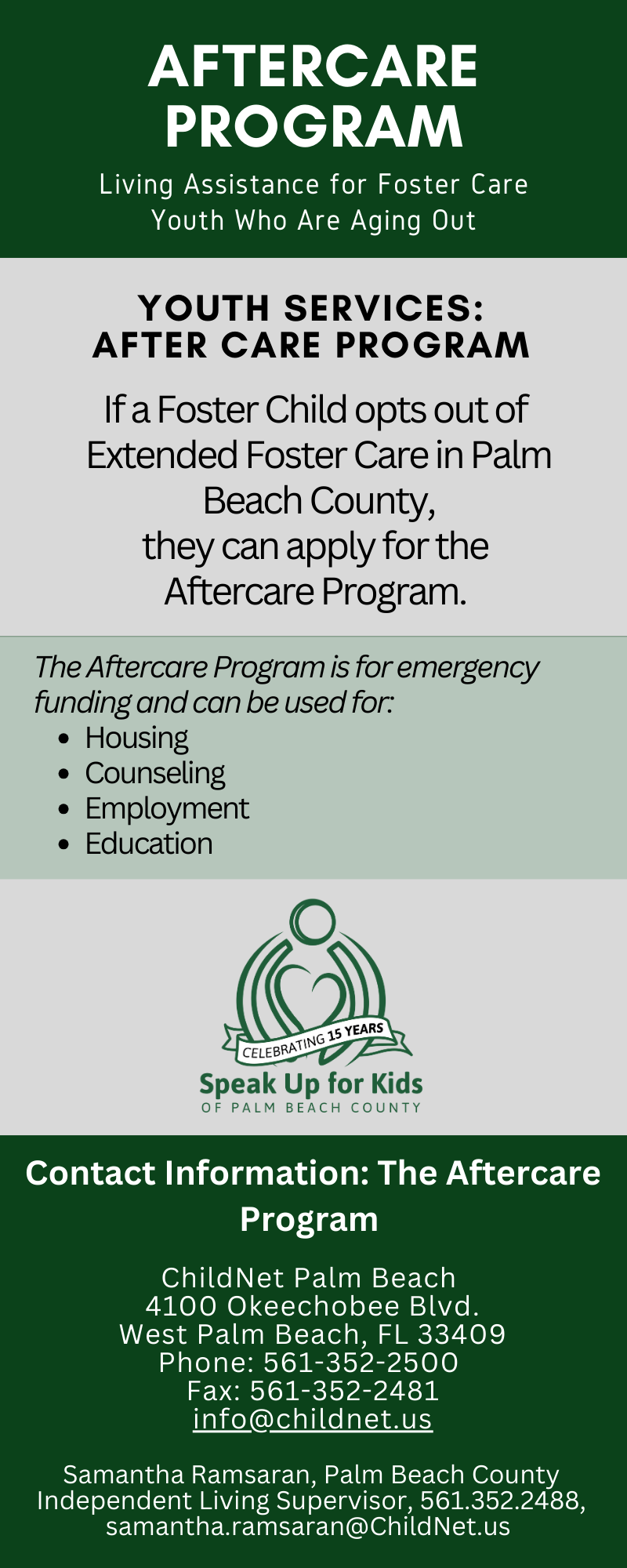
Foster children have the option to participate in Extended Foster Care (EFC) or receive Postsecondary Education Services and Support (PESS), as explained in previous articles. If a foster child decides not to participate in EFC, they can apply for the Aftercare Program. Previously, only young adults living in licensed foster care at age 18 and not in Extended Foster Care were eligible for Aftercare.
Expanded Eligibility
A recent revision, effective July 1st, 2024, has expanded eligibility for Aftercare to include young adults who were placed with relatives, non-relatives, adopted, put into guardianship, or emancipated.
Childnet Youth Services: Support Beyond Age 18
Childnet’s Youth Services resource is dedicated to assisting foster children aged 13-17 in smoothly transitioning from foster care to independent living. It also supports former foster children aged 18-23 as they continue their journey into adulthood. This program provides valuable assistance in areas such as job training, educational support, financial aid, and career preparation.
Emergency Funding During Times of Crisis
Additionally, in the event of a state or national emergency, such as the COVID-19 pandemic, the Department of Children and Families (DCF) can offer emergency funding to eligible young adults. Previously, this funding was limited to individuals covered under specific Florida statutes. The Aftercare Program for Foster Care Children provides aid to those who have cycled out of the foster care system and opted out of Extended Foster Care. This emergency funding can be utilized for various needs including housing, counseling, employment, or education.
Final Thoughts
These legislative updates reflect a growing understanding that foster youth need continued support well into early adulthood. By expanding eligibility, increasing access to emergency funding, and strengthening transitional programs, Florida is creating a more compassionate and practical safety net for young adults aging out of care. For those navigating life after foster care, these changes offer not just resources, but renewed hope for stability, opportunity, and long-term success.