

When Can I Start Investing?
Contributed by Speak Up for Kids Student Intern Team — This article was developed through the combined efforts of multiple student interns, each bringing unique skills and perspectives to support life skills education for foster youth.
Overview
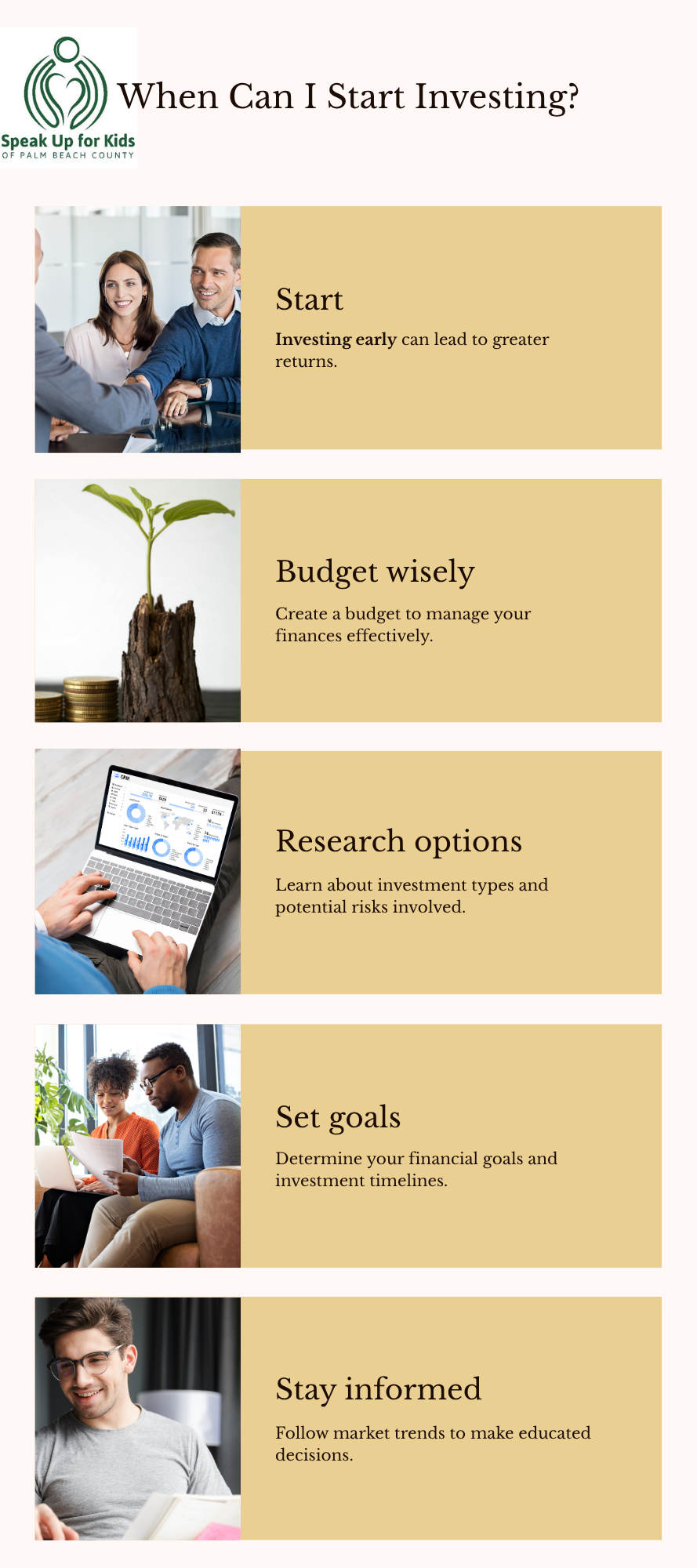
Investing is an essential part of building wealth and securing your financial future. However, knowing when to start investing can be challenging. It's important to assess your financial situation and readiness before diving in. Here are some steps and key questions to help determine when you can start investing.
Steps:
Assess Your Financial Situation:
Review your income, expenses, debts, and savings.
Ensure you have a stable source of income.
Build an Emergency Fund:
Save enough money to cover 3-6 months of living expenses in case of unexpected events.
This fund should be easily accessible, such as in a savings account.
Pay Off High-Interest Debt:
Focus on paying down high-interest debts, such as credit card balances.
Reducing high-interest debt can improve your financial stability and free up funds for investing.
Understand Your Investment Goals:
Define your short-term and long-term financial goals.
Determine your risk tolerance and investment time horizon.
Educate Yourself:
Learn the basics of investing, including different types of investments and how the market works.
Consider reading books, taking courses, or seeking advice from financial professionals.
Start with a Plan:
Develop a clear investment plan that aligns with your goals and risk tolerance.
Decide how much money you can comfortably invest regularly.
Key Questions:
Do I Have a Stable Income?
Is my job or source of income reliable?
Can I consistently set aside money for investing?
Have I Built an Emergency Fund?
Do I have 3-6 months of living expenses saved in an easily accessible account?
Am I prepared for unexpected financial emergencies?
Have I Paid Off High-Interest Debt?
Do I have high-interest debt, such as credit card debt, that needs to be paid off?
Can I manage my debt payments while investing?
What Are My Investment Goals?
What are my short-term and long-term financial goals?
Am I investing for retirement, buying a home, or another specific goal?
What Is My Risk Tolerance?
How comfortable am I with the possibility of losing money in the short term?
Am I prepared for the ups and downs of the market?
What Is My Investment Time Horizon?
How long do I plan to keep my money invested before I need to access it?
Am I investing for the short term (less than 5 years) or long term (more than 5 years)?
Do I Understand the Basics of Investing?
Have I educated myself on different types of investments (stocks, bonds, mutual funds, etc.)?
Do I understand how to diversify my investments to manage risk?
Do I Have a Clear Investment Plan?
Have I set a budget for how much I can invest regularly?
Do I have a strategy for choosing investments that align with my goals?
Can I Handle the Emotional Aspects of Investing?
Am I prepared to stay calm during market fluctuations?
Can I avoid making impulsive decisions based on short-term market movements?
Have I Considered Seeking Professional Advice?
Do I need help from a financial advisor to create an investment plan?
Have I researched and chosen a reputable financial advisor if needed?
Tips:
Start Small: You don't need a large sum of money to start investing. Begin with what you can afford and increase over time.
Automate Investments: Set up automatic transfers to your investment accounts to ensure consistency.
Diversify: Spread your investments across different asset classes to manage risk.
Stay Informed: Keep learning about investing and stay updated on market trends and economic conditions.
By asking yourself these questions and following these steps, you can determine when you're ready to start investing and make informed decisions to grow your wealth over time.
Final Thoughts
Investing isn’t about starting with a lot of money—it’s about starting at the right time with the right mindset. By building a strong financial foundation and understanding your goals, you can approach investing with confidence and clarity. Take it step by step, stay consistent, and your efforts can grow into long-term financial success.