

Checking and Replacing Belts and Hoses
Overview
Congratulations on owning your first car! This is an exciting time, but it's also a time to start thinking about car maintenance. If you're like many young adults, you may not have had much guidance on this topic, especially if you've had few responsible adults in your life. But don't worry, we've got you covered. In this guide, we'll walk you through the basics of checking and replacing your car's belts and hoses, so you can keep your new ride running smoothly for years to come.
Always Consider a Mechanic
Most of the time, you’ll want to have a mechanic work on your car. Finding a reputable mechanic can be tricky, but once you find one, maintain a good relationship. Your car needs to be dependable. Make sure you put aside money for car maintenance, you won’t regret it.
Conduct Personal Research
If you wish to do the work yourself, remember, Google or YouTube can be your friend…it’s loaded with all kinds of “how-to’s” if you wish to do this yourself.
Keep these things in mind when considering what to “watch” on your car:
Serpentine Belt
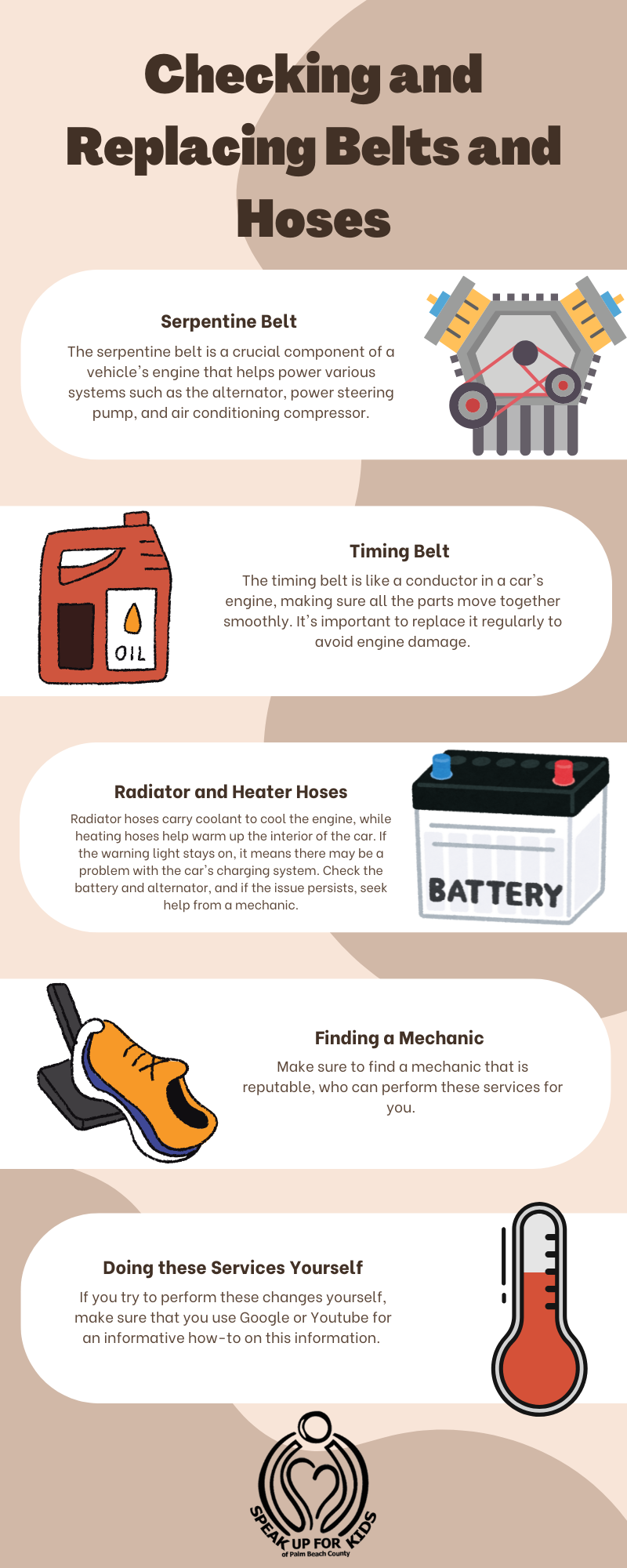
Importance: Powers multiple systems like the alternator and power steering.
How to Check: Look for cracks, fraying, or glazing.
When to Replace: Every 60,000 to 100,000 miles.
Tips: Listen for squealing noises, which indicate a worn belt.
Timing Belt
Importance: Synchronizes engine functions.
How to Check: Often requires a professional inspection.
When to Replace: As per your car’s manual, typically every 60,000 to 100,000 miles.
Tips: Prevents severe engine damage if it fails.
Radiator and Heater Hoses
Importance: Carries coolant through the engine and heater core.
How to Check: Inspect for leaks, bulges, cracks, or soft spots.
When to Replace: Every 4 years or if any damage is found.
Tips: Check hoses when the engine is cool to avoid burns.
Final Thoughts
Taking care of your vehicle doesn’t have to be overwhelming—whether you rely on a trusted mechanic or decide to tackle smaller tasks yourself, staying proactive goes a long way. By paying attention to key components like belts and hoses, you can prevent costly breakdowns and keep your car running safely and smoothly. A little awareness and regular maintenance can save you time, money, and stress in the long run. Prioritize your car’s health now, and it will stay dependable when you need it most.