

Trauma and the Teen Brain: A Q&A
Contributed by Speak Up for Kids Student Intern Team — This article was developed through the combined efforts of multiple student interns, each bringing unique skills and perspectives to support life skills education for foster youth.
Overview
Understanding trauma and its impact on teenagers is essential for parents, educators, and anyone who works with youth. Adolescence is a critical period of brain development, and distressing experiences can shape how teens think, feel, and behave. This Q&A breaks down what trauma is, how it affects the developing brain, and what supportive steps can be taken to help teens heal. By gaining insight into these processes, we can better recognize the signs of trauma and respond with empathy, awareness, and effective support.
Q&A
Q: What is trauma, particularly concerning teenagers?
A: Trauma is defined as a distressing or disturbing experience that overwhelms an individual's ability to cope. For teenagers, whose brains are still developing, trauma can have significant and lasting effects on their psyche.
Q: How does trauma affect the teenage brain?
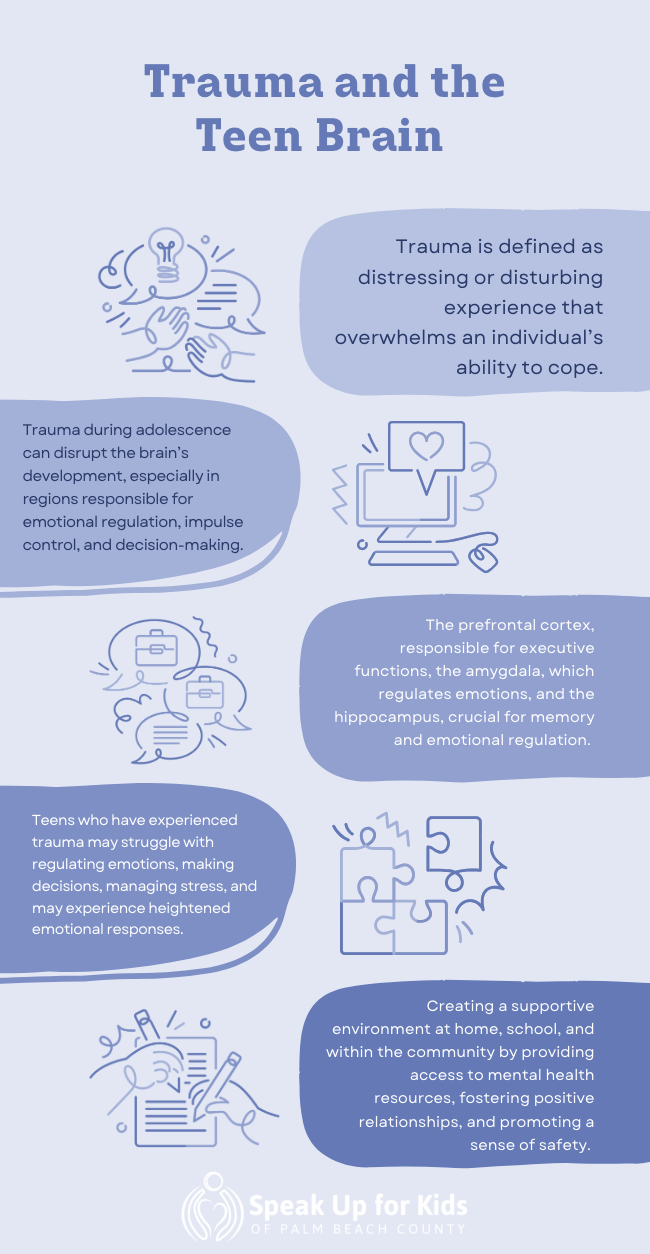
A: Trauma during adolescence can disrupt the brain's development, especially in regions responsible for emotional regulation, impulse control, and decision-making.
Q: Which specific areas of the brain are impacted by trauma during adolescence?
A: The prefrontal cortex, responsible for executive functions, the amygdala, which regulates emotions, and the hippocampus, crucial for memory and emotional regulation, are particularly affected.
Q: What are some consequences of trauma on the teenage brain?
A: Teens who have experienced trauma may struggle with regulating emotions, making decisions, managing stress, experiencing heightened emotional responses, and encountering difficulties with memory, learning, academic performance, and forming relationships.
Q: Can the effects of trauma on the teenage brain be reversed?
A: Yes, with appropriate support and interventions such as cognitive-behavioral therapy (CBT), trauma-focused therapy, and mindfulness-based interventions, teens can build resilience and mitigate the negative consequences of trauma.
Q: What kind of supportive environment is important for teenagers recovering from trauma?
A: Creating a supportive environment at home, school, and within the community by providing access to mental health resources, fostering positive relationships, and promoting a sense of safety and stability is crucial for teens recovering from trauma.
Q: What is the significance of understanding the effects of trauma on the teenage brain?
A: Understanding these effects helps in implementing appropriate interventions to support teens in overcoming trauma and building resilience for a brighter future.
Final Thoughts
Trauma can leave deep and lasting imprints on the teenage brain, but hope and healing are absolutely possible with the right interventions and supportive environment. By understanding how trauma affects development and recognizing the importance of emotional safety and mental health resources, we can play a meaningful role in helping teens recover and thrive. The more knowledgeable we are, the better equipped we become to guide young people toward resilience, stability, and a healthier future.