

Contributed by Aditi Amin — Speak Up for Kids Student Intern, a sophomore at Fulton Science Academy, passionate about artificial intelligence, cybersecurity, mental health advocacy, and using technology to create meaningful change.
Every time you use the internet, you leave behind information about yourself. Whether you are posting on social media, searching Google, downloading an app, or simply visiting a website, your online activity can create a digital footprint. Your digital footprint is the trail of information you leave behind through your online activities. Understanding what makes up this footprint can help you make smarter decisions about what you share online.
What Is a Digital Footprint?
A digital footprint is the record of your online activity. It can include things you intentionally share, such as social media posts, comments, photos, videos, and profiles. This is called your active digital footprint because you are deliberately putting information online.
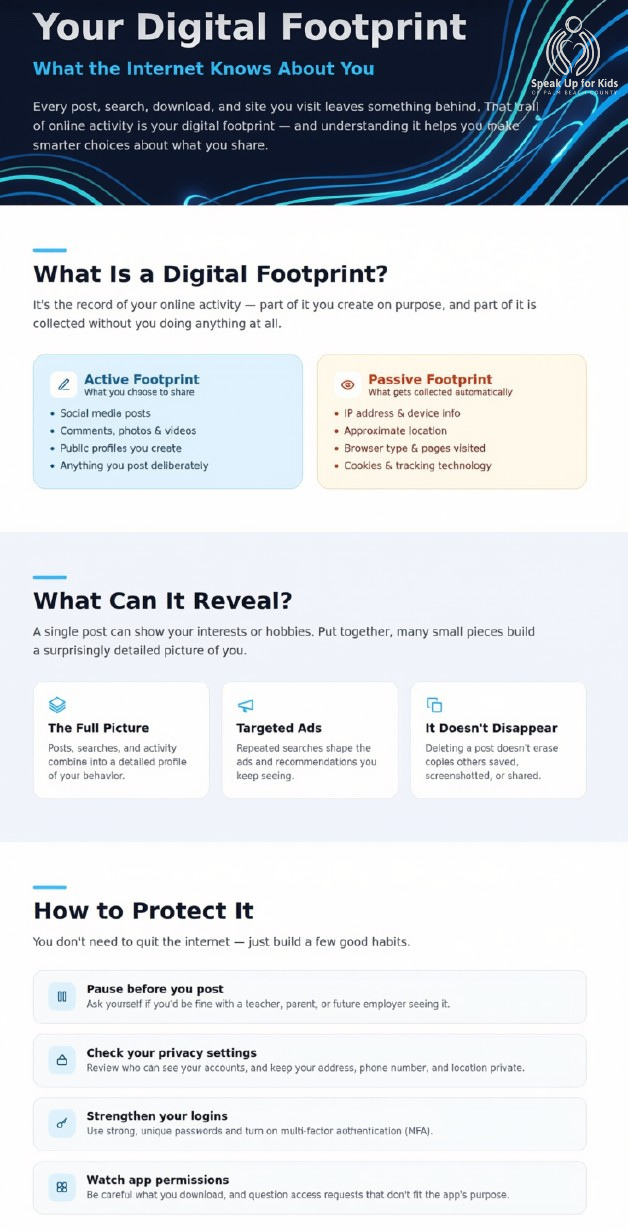
There is also a passive digital footprint, which is information collected about you while you use websites and apps. For example, websites may collect information about your IP address, device, approximate location, browser type, and the pages you visit. Apps and websites can also use cookies and other tracking technologies to understand how people interact with their services.
What Can Your Digital Footprint Reveal?
Your digital footprint can reveal more than you might expect. A single social media post may show your interests, school, hobbies, friends, or the places you visit. When many pieces of information are combined, they can create a much more detailed picture of your online behavior.
Companies may use information about your activity to personalize advertisements and recommendations. For example, if you repeatedly search for a particular type of product, you may start seeing advertisements related to it. Your online activity can also affect how organizations understand your interests and preferences.
This is why it is important to remember that deleting something from your profile does not necessarily mean every copy of the information disappears. Other people may have saved, screenshotted, or shared it.
How Can You Protect Your Digital Footprint?
You do not need to stop using the internet to protect your privacy. Instead, develop good digital habits.
Before posting something, consider whether you would be comfortable with a teacher, parent, college admissions officer, or future employer seeing it. Review the privacy settings on your social media accounts and avoid publicly sharing sensitive information such as your home address, phone number, passwords, or real-time location.
You should also use strong, unique passwords and enable multi-factor authentication (MFA) when available. Be careful about the apps you download and the permissions you give them. If an app asks for access to information that does not seem necessary for its purpose, consider whether you really need to grant that permission.
Think Before You Post
Your digital footprint is part of your online identity. The internet can be useful for learning, communicating, creating, and connecting with others, but it is important to understand that online actions can have lasting consequences.
The best way to manage your digital footprint is to pause before you post, understand what information you are sharing, and regularly check your privacy settings. You may not be able to control everything that is collected about you online, but you can make thoughtful choices about the information you put out there.
Edited by MC