
Contributed by Alyana Andre — Speak Up for Kids Student Intern, an upcoming senior at Dr. Joaquin Garcia High School, passionate about mental health advocacy, literature, and uplifting others through compassion and education.
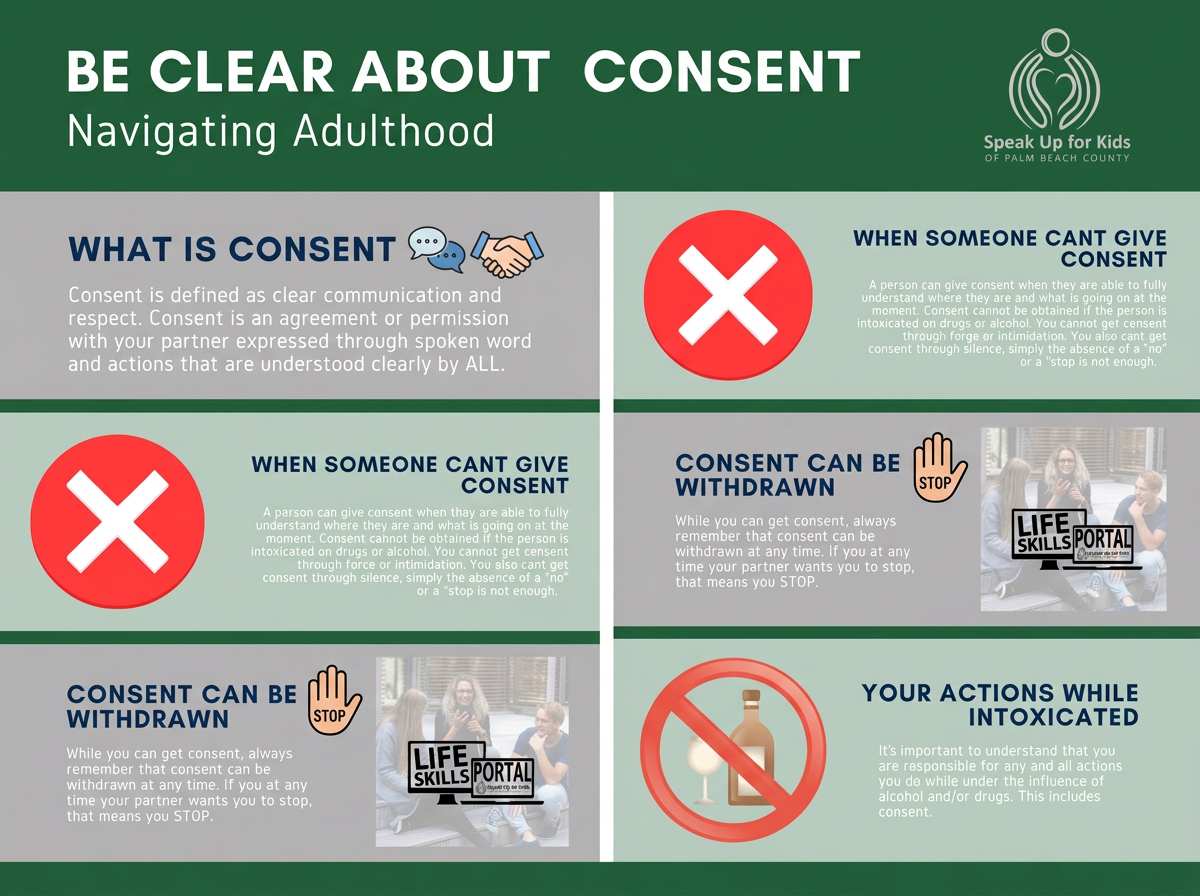
Consent is defined as the agreement to do something. Some common misconceptions about consent are that consent can be negotiated, coerced, or even debated. This article aims to help YOU gain a general understanding of what consent looks and sounds like.
Boundaries
Boundaries are limitations that an individual puts in place as a means to protect themselves and regulate their well-being. Boundaries can look like verbal requests like “I don’t like it when you touch my hair” or physical routines like being alone to declutter your thoughts.
Boundaries are NOT:
Strictly defined: There are no limitations or rules to putting up boundaries, as they are all subjective to each individual and their own needs.
Selfish: Boundaries establish a sense of self-care and foster healthy relationships. This is not selfish, it’s selfless.
Hurtful: Boundaries do not cause harm to you or anyone else, in fact they prevent harm by nurturing communication and an understanding.
Creating a Mutual Understanding:
Oftentimes consent involves a consensus upon two separate individuals. Because of this, a mutual understanding is to be fostered between the two individuals so that consent can be created.
This does NOT look like:
Ignoring or disregarding another person’s input. Looking at different perspectives helps us collaborate with one another.
Establishing indifference. Fostering compassion and empathy for these different perspectives helps us recognize others’ emotions.
Suppressing your own thoughts and feelings. Communication is key in establishing a mutual understanding and finding common ground!
Power vs. Pressure
Finally, it is crucial in understanding the difference between your own decision, and a decision that has been made out of manipulation. Differentiating power and pressure can help us navigate consent and what it should feel and look like.
Power: Your own individual authority. These are decisions made outside of arguments and coercion. A “yes” or “no” is a common example of a way that YOU are exerting your individual autonomy.
Pressure: Pressure looks like putting up an argument or any sort of reasoning to conflict your boundary or your decisions. Manipulation, gaslighting, and blackmail are all ways that pressure can be inflicted on you as a way to conflict with your individual autonomy.
Consent can be tricky in understanding, that’s why it's important to establish a basic understanding of what it looks like between 2 individuals. Remember, consent is respectful, selfless, and understanding.
Edited by MC