

Understanding Your Medical Care as You Age out of Foster Care
Contributed by Speak Up for Kids Student Intern Team — This article was developed through the combined efforts of multiple student interns, each bringing unique skills and perspectives to support life skills education for foster youth.
Overview
Understanding and managing your medical care is crucial for maintaining your health and well-being. Whether you're dealing with a chronic condition, seeking preventative care, or just navigating the healthcare system, being informed and proactive can make a significant difference. Here are some tips and strategies to help you effectively manage your medical care.
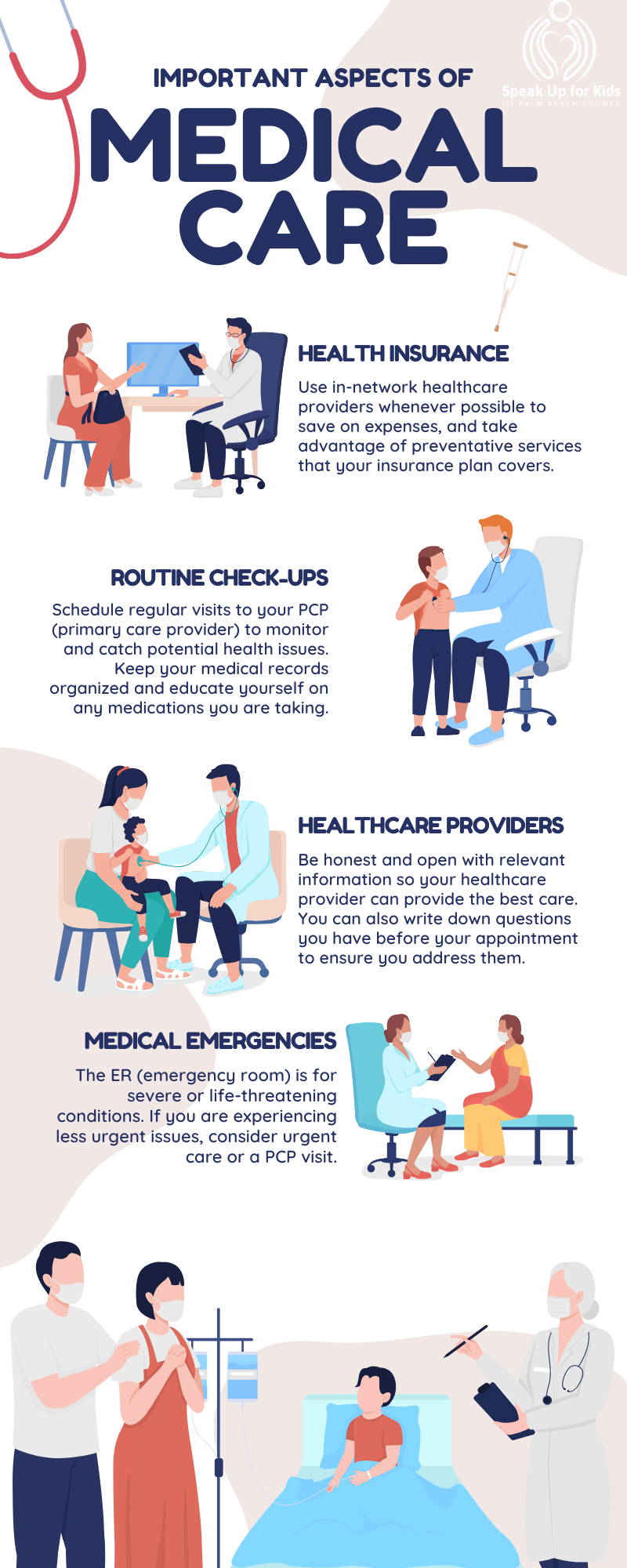
Importance of Medical Care
Preventative Health: Regular check-ups and screenings can catch potential health issues early, leading to better outcomes.
Chronic Condition Management: Proper medical care helps in managing chronic conditions like diabetes, asthma, or heart disease, improving your quality of life.
Emergency Preparedness: Knowing when and how to seek emergency care can be life-saving in critical situations.
Finding the Right Healthcare Provider
Choose the Right Doctor: Look for a primary care physician (PCP) who you feel comfortable with and who understands your health needs. This could be a family doctor, internist, or pediatrician, depending on your age and health situation.
Check Credentials and Reviews: Ensure that your healthcare provider is board-certified and has good patient reviews. You can check online reviews or ask for recommendations from friends or family.
Consider Location and Accessibility: Choose a doctor whose office is conveniently located, especially if you require frequent visits or have limited transportation options.
Understanding Your Health Insurance
Know Your Plan: Understand the details of your health insurance plan, including what it covers, your deductible, co-pays, and out-of-pocket maximums. This helps you avoid unexpected costs.
In-Network Providers: Use in-network healthcare providers whenever possible to minimize your out-of-pocket expenses.
Use Preventative Services: Most insurance plans cover preventative services like vaccinations, screenings, and annual check-ups at no extra cost. Take advantage of these services to stay healthy.
Navigating the Healthcare System
Schedule Regular Check-Ups: Regular visits to your PCP can help monitor your health and catch potential problems early.
Keep Medical Records Organized: Maintain a personal file of your medical records, including test results, medications, and doctor visits. This is especially important if you see multiple specialists.
Understand Your Medications: Know the names, dosages, and purposes of any medications you’re taking. Be aware of potential side effects and interactions with other drugs.
Communicating with Healthcare Providers
Ask Questions: Don’t hesitate to ask your doctor questions about your diagnosis, treatment options, and medications. Understanding your health situation is key to making informed decisions.
Be Honest and Open: Share all relevant information with your healthcare provider, including symptoms, lifestyle habits, and concerns. This helps them provide the best care possible.
Bring a List: Write down any questions or symptoms before your appointment to ensure you don’t forget to discuss them with your doctor.
Managing Your Medical Care
Follow Treatment Plans: Adhere to the treatment plans and medication schedules prescribed by your doctor. Consistency is key in managing health conditions.
Track Symptoms: Keep a journal of any symptoms or side effects you experience. This information can be valuable in adjusting your treatment plan if necessary.
Get a Second Opinion: If you’re unsure about a diagnosis or treatment plan, don’t hesitate to seek a second opinion. Another doctor may provide different insights or confirm your current treatment.
Accessing Specialist Care
Know When to See a Specialist: If you have a specific health concern that requires expert attention, your PCP may refer you to a specialist. Understand why you’re being referred and what to expect.
Coordinate Care: Ensure that your PCP and any specialists you see are in communication about your treatment plan. This helps avoid conflicting advice or duplicated tests.
Stay Informed: Research your condition and any recommended treatments so you can have informed discussions with your specialist.
Handling Medical Emergencies
Know When to Go to the ER: Emergency rooms are for severe or life-threatening conditions, such as chest pain, difficulty breathing, or severe injuries. For less urgent issues, consider urgent care or a PCP visit.
Prepare an Emergency Contact List: Keep a list of emergency contacts, including family members, your doctor, and local hospitals, easily accessible.
Have an Emergency Kit: Prepare a kit with essential items like medications, medical records, and insurance information in case you need to go to the hospital quickly.
Tips for Managing Medical Costs
Review Bills Carefully: Always review your medical bills and insurance statements for accuracy. Contact your provider or insurance company if you see any discrepancies.
Explore Payment Plans: If you’re facing high medical costs, ask your healthcare provider or hospital about payment plans or financial assistance programs.
Use Generic Medications: When possible, opt for generic medications, which are often much cheaper than brand-name drugs but just as effective.
Final Thoughts
Navigating medical care can be complex, but with the right knowledge and strategies, you can take control of your health. Finding a trusted healthcare provider, understanding your insurance, and staying informed about your treatment options are key steps in managing your medical care effectively. Remember, being proactive and informed is essential to ensuring you receive the best possible care.
If you ever feel overwhelmed or uncertain about your medical care, don't hesitate to seek help or ask for clarification. Your health is your most valuable asset and taking the time to manage it properly will lead to better outcomes and a higher quality of life.