

Got a Traffic Ticket? Now What?
Contributed by Speak Up for Kids Student Intern Team — This article was developed through the combined efforts of multiple student interns, each bringing unique skills and perspectives to support life skills education for foster youth.
Overview
Traffic violations and tickets are common occurrences for drivers and can have various consequences, from fines to increased insurance rates. Understanding the process and your rights can help you handle these situations more effectively. This article provides essential information on traffic violations, handling tickets, and what to do if you receive one.
What is a Traffic Violation?
A traffic violation occurs when a driver breaks a law or regulation related to operating a vehicle. Violations can range from minor infractions, like parking tickets, to serious offenses, such as reckless driving. Common types of traffic violations include:
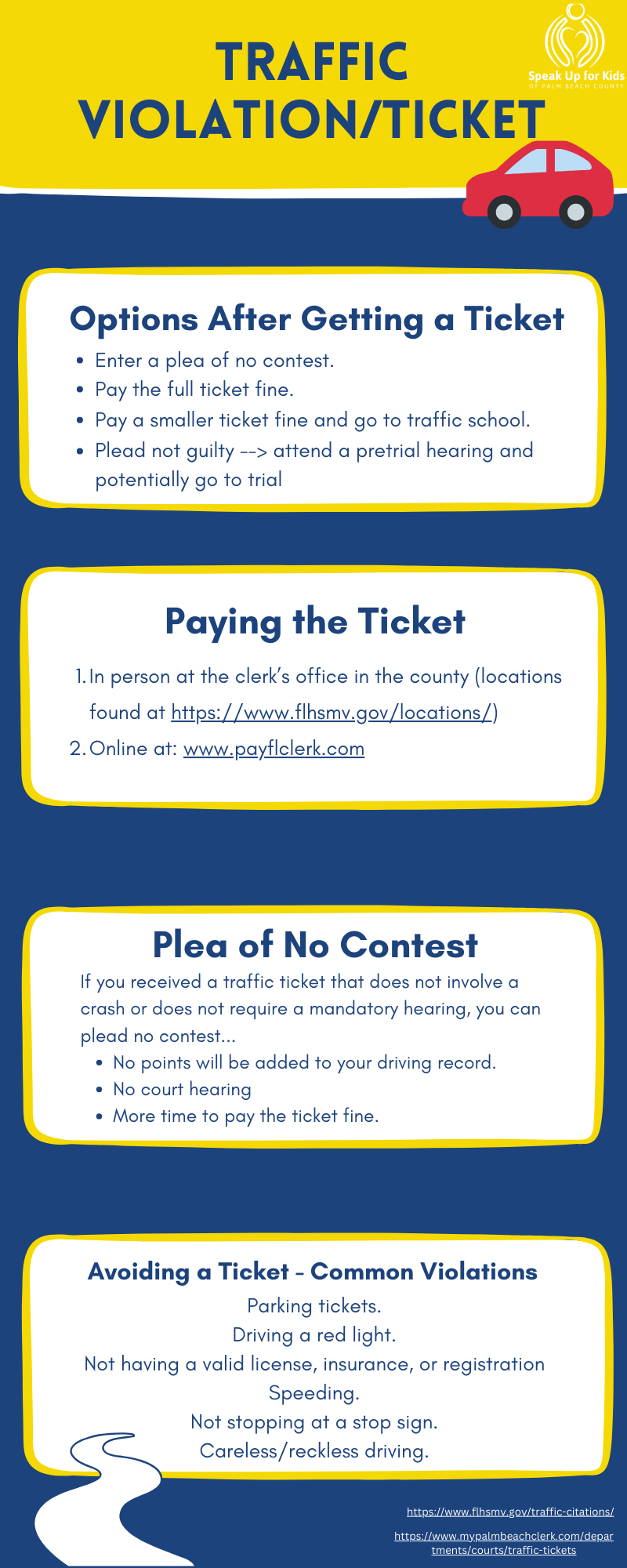
Speeding: Exceeding the posted speed limit.
Running a Red Light: Disregarding traffic signals.
Driving Under the Influence (DUI): Operating a vehicle while impaired by alcohol or drugs.
Illegal Parking: Parking in restricted areas or without proper permits.
Seatbelt Violation: Not wearing a seatbelt when required.
Receiving a Traffic Ticket
If you are issued a traffic ticket, it will typically include the following information:
Violation Details: Description of the infraction.
Ticket Number: Unique identifier for the citation.
Date and Time: When the violation occurred.
Location: Where the violation took place.
Fines and Penalties: Amount you owe and any additional penalties.
Instructions: How to pay the fine or contest the ticket.
What to Do When You Receive a Ticket
Read the Ticket Carefully
Tip: Review all the information on the ticket to ensure accuracy and understand the charges.
Why It Matters: Incorrect details on the ticket could be grounds for dismissal if you decide to contest it.
Pay the Fine or Contest the Ticket
Tip: Follow the instructions on the ticket to either pay the fine or challenge the violation. Payment can often be made online, by mail, or in person.
Why It Matters: Prompt payment can prevent additional penalties, while contesting the ticket may result in a reduction or dismissal if you believe the ticket was issued in error.
Attend Court If Required
Tip: If the ticket requires a court appearance, make sure to attend the scheduled hearing. Missing the court date can result in additional fines or a warrant for your arrest.
Why It Matters: Appearing in court allows you to present your case and potentially resolve the matter in your favor.
Check for Points on Your Driving Record
Tip: Verify if the violation adds points to your driving record, which can impact your insurance rates and driving privileges.
Why It Matters: Accumulating too many points may lead to license suspension or higher insurance premiums.
Consider Legal Assistance
Tip: If the violation is severe or you have questions about how to handle it, consult a traffic attorney for guidance.
Why It Matters: Legal professionals can provide advice, represent you in court, and help you navigate complex traffic laws.
Consequences of Traffic Violations
Fines: Monetary penalties for the infraction.
Points on Your License: Points added to your driving record can affect insurance rates and lead to license suspension.
Increased Insurance Rates: Traffic violations can result in higher premiums.
License Suspension: Accumulating too many points or committing serious offenses can lead to temporary or permanent suspension of your driving privileges.
Preventing Future Violations
Follow Traffic Laws: Adhere to speed limits, signals, and other regulations to avoid violations.
Stay Informed: Keep up with changes in traffic laws and regulations.
Drive Defensively: Be aware of your surroundings and anticipate potential hazards to avoid accidents and violations.
Final Thoughts
Handling traffic violations and tickets requires attention to detail and prompt action. By understanding the process and knowing your rights, you can manage traffic tickets more effectively and minimize their impact on your driving record and finances. Remember to stay informed, follow traffic laws, and seek professional advice if needed to navigate these situations successfully.