

What Are My Options As I Age Out?
Contributed by Speak Up for Kids Student Intern Team — This article was developed through the combined efforts of multiple student interns, each bringing unique skills and perspectives to support life skills education for foster youth.
Overview
Aging out of the foster care system can be a challenging transition, especially when it comes to finding stable and supportive housing. As you move towards independence, it's essential to explore various housing options that can provide security, affordability, and a sense of community. This guide outlines the key housing options available and offers practical advice for securing a suitable living arrangement.
1. Transitional Housing
Why Consider It? Transitional housing programs are designed to help young adults who are aging out of foster care by providing temporary accommodation and support services. These programs often include life skills training, job placement assistance, and counseling.
Popular Programs:
Foster Youth to Independence (FYI) Initiative: Provides rental assistance and support services.
Independent Living Programs: Local programs that offer housing and resources to ease the transition to independent living.
2. Affordable Housing
Why Consider It? Affordable housing options can offer long-term stability and financial relief. These housing programs are typically income-based, making them more accessible for young adults with limited financial resources.
Popular Programs:
Section 8 Housing Choice Voucher Program: Provides rental assistance based on income.
Low-Income Housing Tax Credit (LIHTC) Properties: Offers reduced rent for eligible tenants.
3. Shared Housing
Why Consider It? Shared housing involves living with roommates, which can reduce living expenses and provide a built-in support network. It’s a good option for those who want to share costs and responsibilities.
Popular Options:
Roommate Matching Services: Platforms like Craigslist or Facebook groups where you can find potential roommates.
Co-Living Spaces: Designed for shared living with additional amenities and community activities.
4. Public Housing
Why Consider It? Public housing is managed by government agencies and offers affordable living options. These units are typically available at a lower cost and may provide additional support services.
How to Apply:
Local Housing Authorities: Contact your local housing authority to learn about available public housing options and application processes.
5. Subsidized Housing
Why Consider It? Subsidized housing involves rental assistance provided by various programs to reduce the cost of rent for eligible individuals. This can make housing more affordable and manageable.
Popular Programs:
HUD Subsidized Housing: Offers rental assistance and affordable housing options.
Supportive Housing Programs: Provide additional services such as case management and counseling.
6. Private Rentals
Why Consider It? Renting from a private landlord offers flexibility and independence. It’s important to ensure that the rental is within your budget and meets your needs.
Tips for Finding Private Rentals:
Online Listings: Use websites like Zillow or Apartments.com to find rental listings.
Local Real Estate Agents: Seek assistance from agents who can help you find suitable rentals.
Tips for Securing Housing
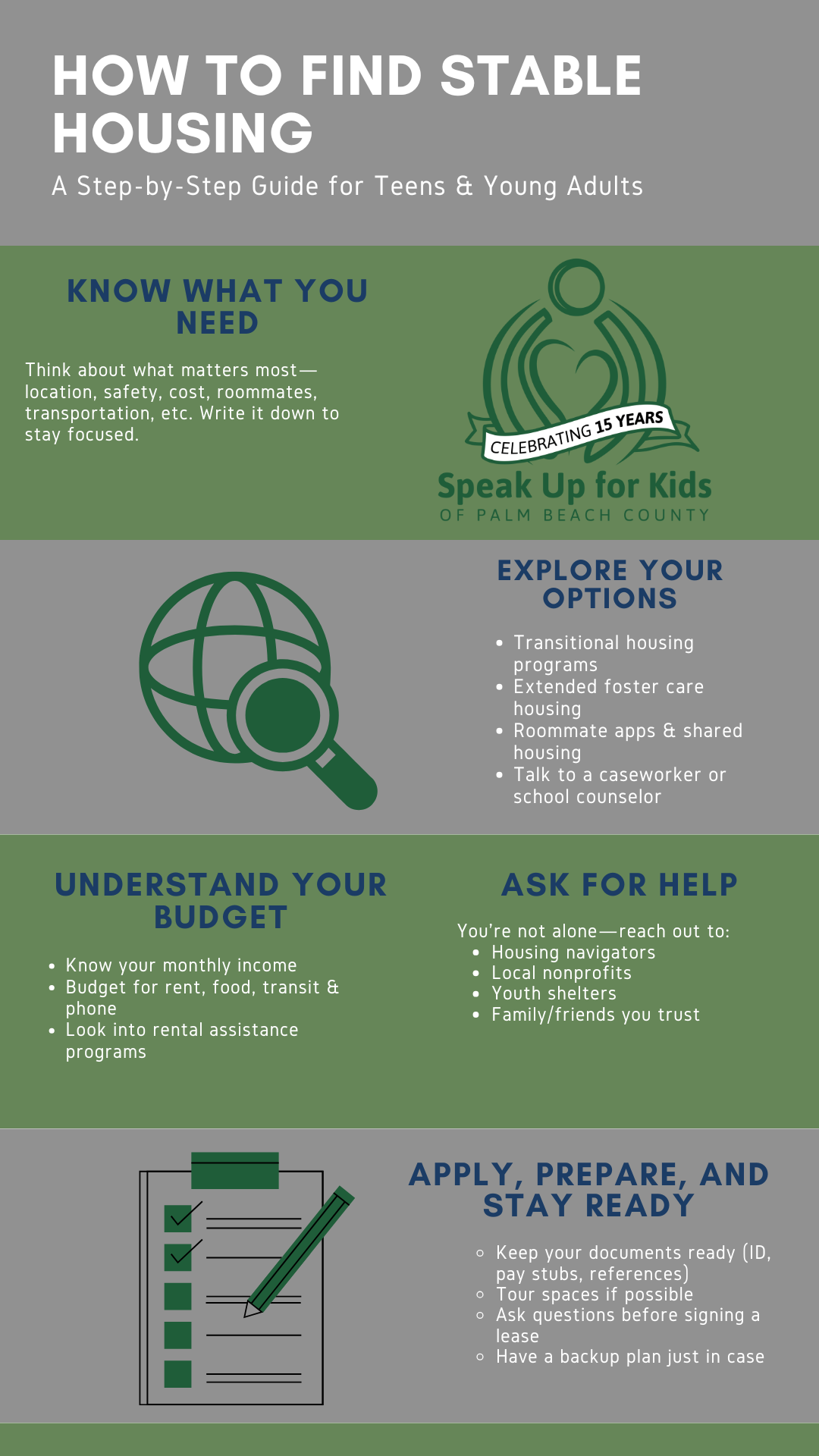
1. Budgeting Determine your budget and consider all associated costs, including utilities, deposits, and maintenance. Ensure that your income or financial assistance can cover these expenses.
2. Research Research housing options thoroughly to find a location that suits your needs and preferences. Consider proximity to work, school, or support services.
3. Apply Early Apply for housing programs and rental opportunities as early as possible. Waiting lists can be long, so starting the process early can increase your chances of securing suitable housing.
4. Seek Assistance Reach out to local agencies, support groups, or case managers who can offer guidance and assistance in finding and securing housing.
5. Prepare Documentation Have your documentation ready, including identification, proof of income, and any other required paperwork. This can streamline the application process.
Final Thoughts
Finding stable and affordable housing as you age out of the foster care system is a crucial step towards independence. By exploring various housing options—such as transitional housing, affordable housing, shared living, and public or subsidized housing—you can find a solution that meets your needs and supports your journey to self-sufficiency. Planning ahead, budgeting wisely, and seeking assistance can help you navigate this transition successfully and build a stable foundation for your future.