

(Legal Series) How Do I Get an Attorney?
Contributed by Estella Lavrik — Speak Up for Kids Student Intern, a Jupiter High School student involved in student government and Music Buddies, who enjoys math, science, writing, and art, with a focus on building professional skills for her future career.
Overview
Finding the right attorney is a crucial step in handling legal issues effectively. Whether you're dealing with a criminal charge, civil matter, or personal legal issue, here’s a guide on how to find and hire an attorney:
Steps:
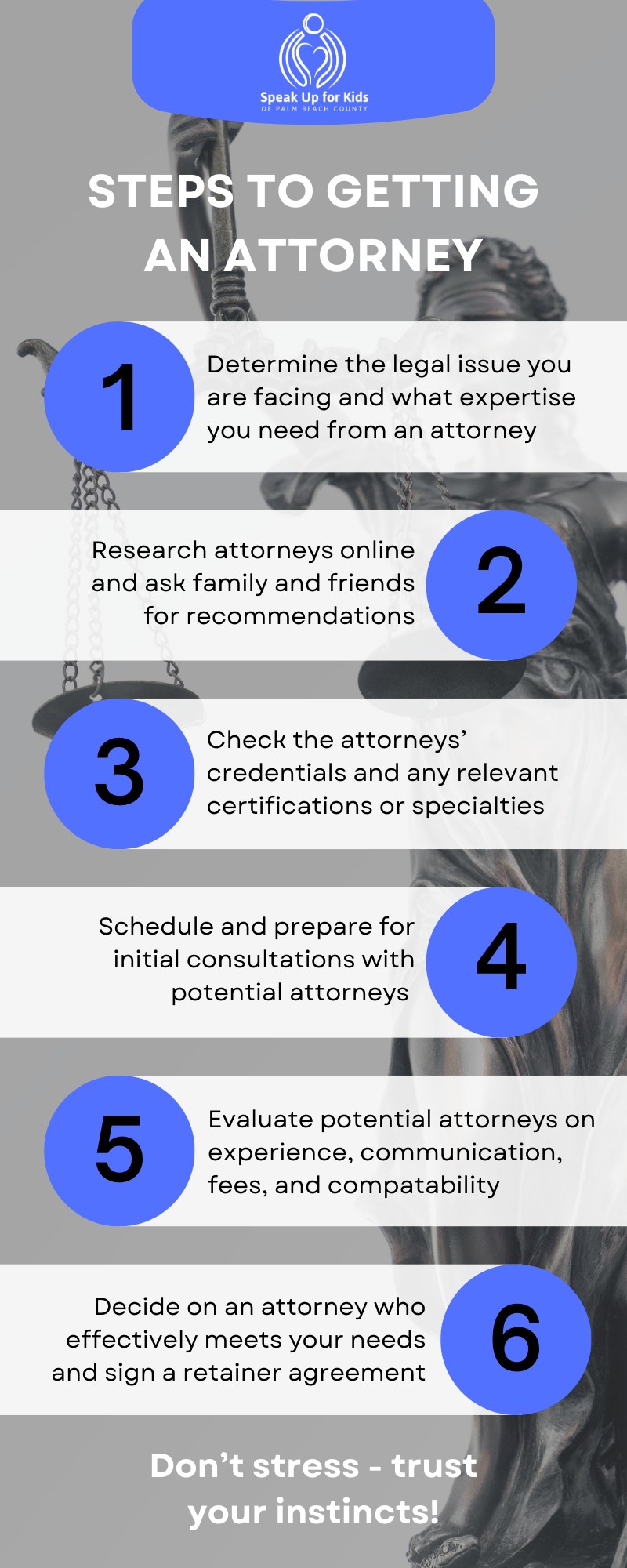
Determine Your Legal Needs:
Identify the type of legal issue you are facing (e.g., criminal defense, family law, personal injury).
Determine what specific expertise or experience you need from an attorney.
Research Attorneys:
Online Search: Use online legal directories, review websites, and law firm websites to find attorneys who specialize in your area of need.
Referrals: Ask friends, family, or colleagues for recommendations based on their experiences.
Check Credentials:
Verify the attorney’s qualifications, including their education, licensing, and any disciplinary history.
Look for any relevant certifications or specialties.
Schedule Consultations:
Contact potential attorneys to schedule initial consultations. Many attorneys offer free or low-cost consultations.
Prepare questions and documents related to your case for the meeting.
Evaluate the Attorney:
Experience: Assess their experience in handling cases similar to yours.
Communication: Evaluate their communication style and how well they explain legal concepts.
Fees: Discuss their fee structure, including hourly rates, flat fees, or contingency fees.
Compatibility: Consider whether you feel comfortable and confident in their ability to represent you.
Make Your Decision:
Choose an attorney who meets your needs and whom you trust to handle your case effectively.
Review and sign a retainer agreement that outlines the terms of your representation.
Tips:
Check Reviews: Read client reviews and testimonials to gauge the attorney’s reputation.
Consider Location: Choose an attorney who practices in the jurisdiction where your case will be heard.
Trust Your Instincts: Select an attorney with whom you feel comfortable and confident.
Who Is the Public Defender and What Can They Do for Me?
A public defender is a court-appointed attorney who represents individuals accused of crimes and cannot afford to hire a private attorney. Public defenders provide legal representation for defendants in criminal cases and ensure that individuals receive a fair trial.
What a Public Defender Can Do for You:
Provide Legal Representation:
Defense: Represent you in court and advocate on your behalf throughout the legal process.
Advice: Offer legal advice on your case, including potential defenses and plea options.
Investigate the Case:
Gather Evidence: Collect and review evidence, including witness statements, police reports, and other case materials.
Investigate: Conduct investigations to build a defense strategy.
Negotiate Plea Deals:
Plea Bargaining: Negotiate with the prosecution for a reduced charge or sentence if a plea deal is in your best interest.
Recommendations: Advise you on whether to accept a plea deal or proceed to trial.
Represent in Court:
Court Hearings: Represent you in all court hearings, including arraignment, bail hearings, and trial.
Legal Motions: File motions and requests with the court as needed to support your defense.
Prepare for Trial:
Defense Strategy: Develop a defense strategy and prepare for trial by organizing evidence and identifying witnesses.
Trial Representation: Represent you during the trial and present your case to the judge or jury.
Appeals:
Post-Conviction: If convicted, a public defender can assist with filing appeals to challenge the conviction or sentence.
Final Thoughts:
Understand Your Rights: Public defenders are dedicated professionals who work to ensure that you receive a fair trial. However, they often have large caseloads, so it’s important to understand that their availability and time may be limited.
Be Honest: Provide your public defender with all relevant information about your case to help them effectively represent you.
Ask Questions: Don’t hesitate to ask your public defender about any aspects of your case or the legal process that you don’t understand.
By following these steps for finding an attorney and understanding the role of a public defender, you can make informed decisions and ensure you receive appropriate legal representation.