

Taking Ownership Of Your Future
Contributed by Speak Up for Kids Student Intern Team — This article was developed through the combined efforts of multiple student interns, each bringing unique skills and perspectives to support life skills education for foster youth.
Overview
It's critical to acknowledge that you are entering adulthood when you turn 18 and start to age out of the foster care system. Being an adult entails taking responsibility for your decisions, deeds, and future. Now that decisions have actual repercussions, knowing that can help you proceed with assurance and purpose.
Making deliberate decisions and striving for the life you desire for yourself are essential components of taking charge of your future. Make an effort to strike a good balance between your social life, job, and education. Your future opportunities may be influenced by the habits you develop now.
Taking Control
As easy as it seems, choose wisely. You are in charge of what you do, and even seemingly insignificant decisions can have a big impact. For instance, decide to de-escalate a situation if it becomes tense or uncomfortable while you are out with friends. Refusing to engage in conflict is a sign of strength and maturity. Making snap decisions can lead to problems, but responding with composure and consideration safeguards your future.
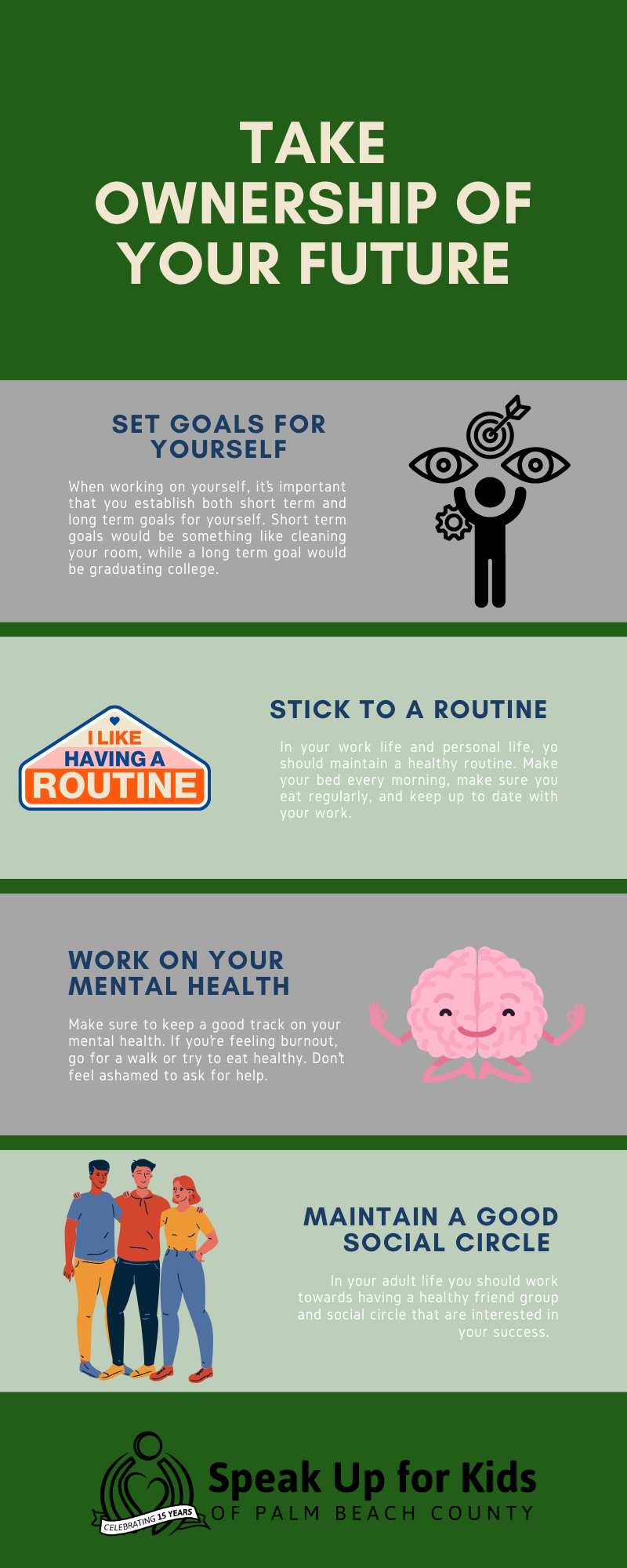
Keep your living area tidy and orderly. Returning to a clean environment can have a positive effect on your mental health regardless of what is going on in your life. Create routines that are effective for you; even something as basic as making your bed in the morning can give you a sense of order and achievement. Routines give you security and get you ready for obligations like keeping a job or doing well in school. Dependability and professionalism are important in both work and educational settings.
Put your mental and physical well-being first. Make an effort to exercise frequently; even short outdoor walks can have an impact. Stress can be lessened by spending time in nature. Give yourself permission to take breaks if you start to feel overburdened or exhausted. Your health is as important as your obligations. If at all possible, think about signing up for a gym or looking for organized ways to keep active. Eat well-balanced meals and drink plenty of water. Over time, little healthy behaviors add up.
Keep in mind that college is not the same as high school—if you choose to enroll. It is your responsibility to manage your schedule, attend classes, and turn in assignments on time. Success is mostly dependent on your work and dedication, and professors expect independence. The same idea holds true in all facets of life: you are ultimately responsible for your own development and achievement.
Building Healthy Relationships and Goals
Be in the company of mentors and friends who truly care about you and who treat you with respect. Mutual respect, trust, and encouragement are the foundation of a healthy friendship. You don't have to face obstacles by yourself. Speak with someone you can trust if you're feeling stressed, overwhelmed, or demoralized. It is a strength, not a weakness, to ask for help.
Make sure your goals are reasonable. Start with attainable short-term objectives to gain momentum and confidence. Work toward more ambitious objectives over time, such as earning a degree, beginning a career, or going back to school. Your efforts have a purpose when you have direction.
Final Thoughts
You deserve a future filled with opportunity, growth, and stability. By making decisions that are truly intentional, building healthy habits, and surrounding yourself with supportive people, you can create a life that reflects your potential and your values!