

Online Etiquette
Contributed by Speak Up for Kids Student Intern Team — This article was developed through the combined efforts of multiple student interns, each bringing unique skills and perspectives to support life skills education for foster youth.
Overview
Online etiquette can take on many different forms depending on which corner of the internet you’re on, but below we’ll go over some general tips for maintaining etiquette no matter the domain.
Grammar and Spelling
Using proper grammar and making sure your spelling is correct helps you not only maintain professionalism in an online setting but also makes it easier for others to understand what you’re saying. Review what you’re about to post before you post it.
These two things are especially important because tone can be hard to determine when reading something like an email or discussion post. Poor grammar and spelling can lead to unintended misinterpretations that skew the meaning of your statement away from what you were actually trying to say.
Being Clear
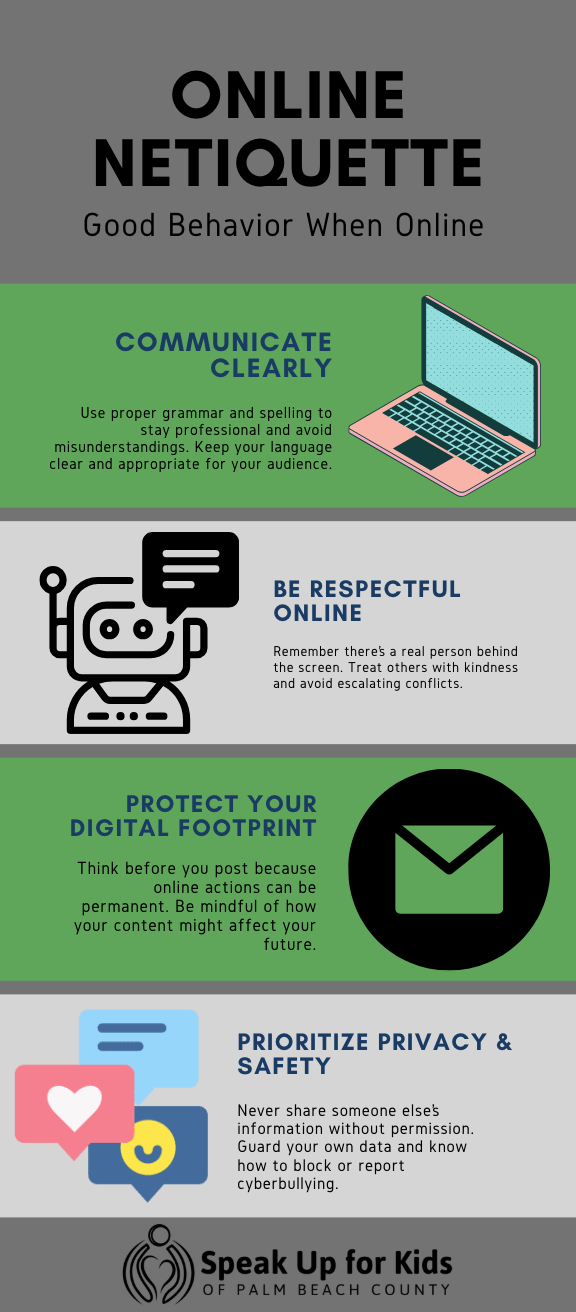
This tip depends on who you’re speaking with and where, but generally speaking, it’s a good practice to use clear and easy to understand language so as not to confuse others.
It’s also important to consider your audience. Some people you talk with might require a higher level of language and professionalism, such as responding to a discussion post for school. Others might be more informal, such as a post on a social media platform. Regardless of where you’re saying something online, make sure to use language that’s most appropriate for the demographic you’re speaking to.
Remember Your Fellow Human
Because there’s a barrier separating us from physically seeing people when we interact with others online, it can be easy to forget that we’re interacting with actual people. What we say and do can still affect people even if it’s through the screen, so make sure to treat people with respect just as you would in real life.
It’s impossible to know what battles another person is fighting on the other side of the screen. You don’t have to agree with everyone, but don’t escalate arguments and be patient with people and the mistakes they make. The internet should be used as a tool to bring people together, not drive them apart.
Digital Footprint
A digital footprint is the “footprint” of all the data your online activities leave behind. A lot of the data is shared purposefully, but much of it isn’t, such as websites and apps using cookies to collect your data.
Your digital footprint is important because it can be used to create a picture of you based on the things you’ve done online. More than just being used by potential employers to learn about applicants, your digital footprint can pose a variety of security risks as companies, advertisers, and scammers can use that data for their own malicious purposes.
Be incredibly careful of what information you’re sharing online. It cannot be understated how difficult it is to erase a digital footprint, and much of the things we post online become permanent. Before posting or doing something online, ask yourself how that might affect you in the future.
Privacy
Never share information someone else has given you without their permission. Especially information like email addresses, phone numbers, or other contact information as those are the main ways for people with nefarious intent to find new people to target. Always get explicit permission from someone before sharing, and if you have information you want to keep private, it’s usually best to not share it anywhere online.
Respect others’ boundaries and always consider how shared information could potentially be misused, even if that’s not your intent.
When sharing your own information with websites, be careful of what you’re sharing as websites will often use things like cookies to take more data then they seem.
Cyberbullying
To protect yourself from cyberbullying, again be mindful of what you share online as others can use it as ammunition against you. Consider the impact of your post and always strive to be kind to others.
Don’t respond to hurtful comments or actions as the aggressors are often trying to get a response out of you. If possible, block or report them. Also consider telling a trusted adult or teacher so that they can help you take action to prevent future instances.
Stand against cyberbullying you see happening to others and don’t participate in it. Not only could it get you in trouble with your school or others in your life, but remember your digital footprint. Employers won’t want to hire someone who is hateful to others.
Final Thoughts
When writing online whether that be an email or on social media, use proper Grammar and Spelling to stay professional, articulate, and to avoid misconceptions. Try to be Clear with what you say so that others have an easier time understanding you, and make sure to know your audience and adapt your tone accordingly.
While online, Remember Your Fellow Human and treat people with respect and kindness. Be patient with others and use the internet to bring people together, not drive them apart. Also be aware of your Digital Footprint, as it paints a picture of you to others and having a poor one can cause you to miss out on opportunities later in life.
Always be respectful of others’ Privacy and don’t share their information without their consent. Be mindful of how sharing information could affect yourself or others in the future, especially when giving information to websites. Remember how to combat Cyberbullying by not responding to and blocking perpetrators and make sure not to participate in it yourself.