

Dealing with Rats
Contributed by Speak Up for Kids Student Intern Team — This article was developed through the combined efforts of multiple student interns, each bringing unique skills and perspectives to support life skills education for foster youth.
Overview
Living on your own comes with a lot of new responsibilities, and pest control is often one of the most unexpected challenges. Rat infestations can happen quickly and are not always a reflection of poor hygiene—sometimes they’re simply the result of nearby food sources, surrounding environments, or existing infestations in neighboring homes. Knowing how to prevent rats, recognize the warning signs, and respond effectively can save you time, stress, and potential health risks. This guide breaks down practical steps you can take to protect your living space and handle a rat problem if one arises.
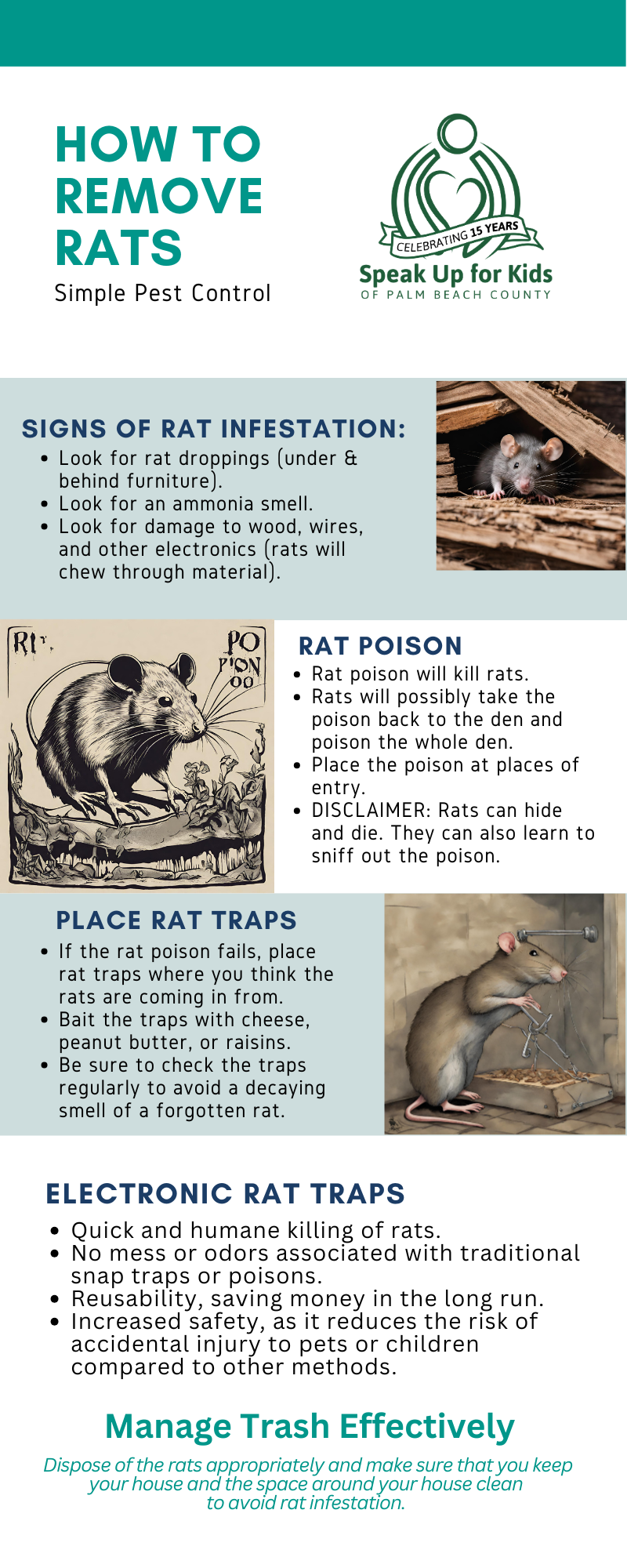
Q: How can you prevent rat infestation when living on your own?
A: Sometimes rats will frequent areas where these is lots of food, woods, or others who are infested. To protect yourself, be sure to maintain a clean space both inside and outside the house. Properly seal all food when storing and disposing of it, and be sure to clean up after eating. These simple habits can help reduce the chance of rats and other pests.
Q: What are some signs indicating a rat infestation in your home?
A: Signs of rat infestation include sounds of scattering and clawing within the walls, attic or cabinets. You may even find rat droppings resembling small raisins under or behind sofas or furniture. If you are noticing a smell of ammonia (indicating rat urine), and damage to wires, wood, and appliances from chewing, chances are you have an unwanted visitor.
Q: What method can you use to get rid of rats if you identify an infestation?
A: If you rent, speak to your landlord, perhaps there’s an opportunity for the whole place to be exterminated. If you have funding you can call a professional exterminator. If you have no funds or the landlord is unreachable, there are several options you might try. One method is using rat poison placed at entry points where rats are entering the house. However, it's important to handle rat poison safely and be aware that rats can adapt to it.
Q: What is another effective method for dealing with rats?
A: Rat traps are a tried and true method. Bait the traps with cheese, raisins, or other food to attract the rats. Check the traps regularly and dispose of any caught rats.
Q: What is a more humane alternative to traditional rat traps?
A: An electronic rat trap is considered a more humane option. These traps deliver an electric shock to the rats, killing them instantly, without prolonged suffering.
Q: What should I do after catching a rat?
A: Be aware that forgotten traps or rats that have died will begin to smell horribly. A rat trapped in the walls or attic will smell for weeks or maybe even months until the body is fully decayed. Nonetheless, there might be a stench if you’ve found a rat even after several days. Wear protective gear (gloves and a mask), and put the rat in a plastic bag, seal it, then place it in a trash bag, tie tightly, and dispose of it in your outdoor trash bin.
Final Thoughts
Dealing with rats can be unsettling, especially when you’re living alone, but it’s a manageable problem when addressed early and correctly. Maintaining cleanliness, staying alert to signs of infestation, and choosing the right removal method are key to protecting your home. Whether that means working with a landlord, calling a professional, or using traps responsibly, taking action promptly can prevent a small issue from becoming a long-term problem. By staying informed and proactive, you can keep your living space safe, sanitary, and rat-free.