

Small Business: A Young Adults Guide to Starting Your First Business
Contributed by Speak Up for Kids Student Intern Team — This article was developed through the combined efforts of multiple student interns, each bringing unique skills and perspectives to support life skills education for foster youth.
Overview
Starting your own business is an exciting opportunity to turn your ideas, passions, and skills into something real. Whether you dream of running a small side hustle or building a long-term career, understanding the steps to start a business can help you feel prepared and confident. This guide breaks down the process into simple, manageable stages to help you move from idea to launch successfully.
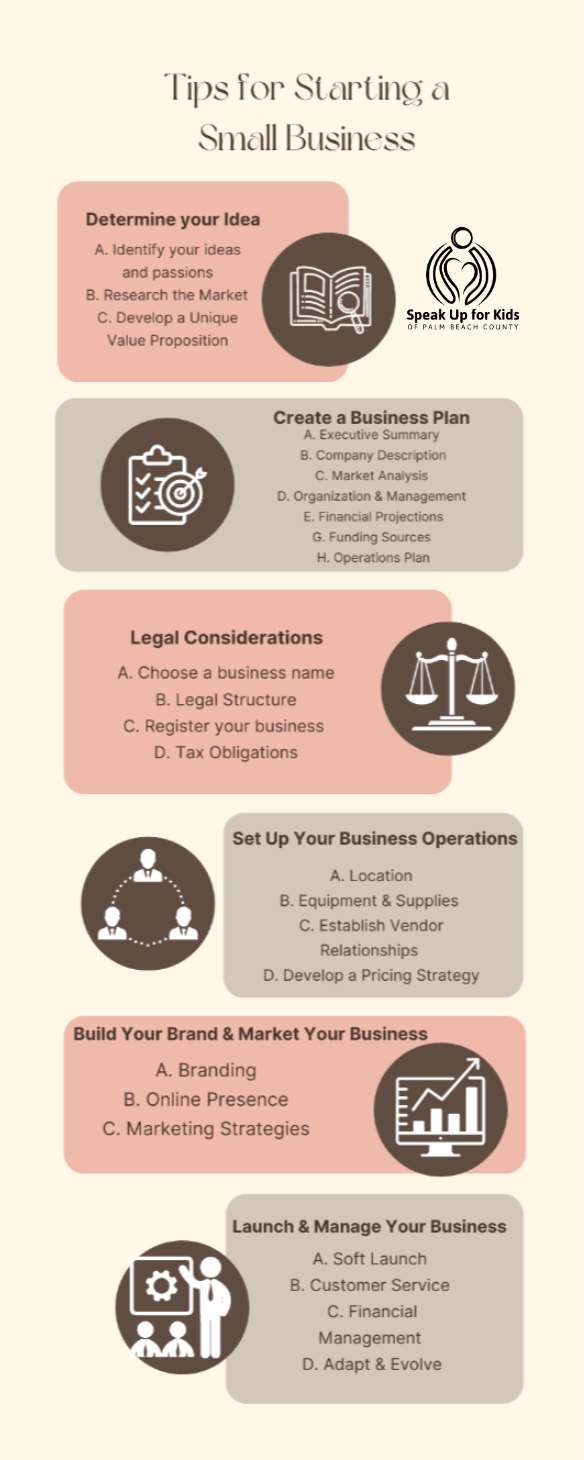
Determine Your Business Idea
Identify your passions and interests: Start by brainstorming and identifying areas where you have a genuine interest or expertise.
Research the market: Conduct market research to assess the viability of your business idea. Identify your target audience, competitors, and potential demand for your product or service.
Develop a unique value proposition: Determine what sets your business apart from competitors and how it provides value to customers.
Create a Business Plan
Executive summary: Provide an overview of your business idea, goals, target market, and competitive advantage.
Company description: Describe the nature of your business, its legal structure, and the products or services you plan to offer.
Market analysis: Include research on your target market, competitors, and industry trends.
Organization and management: Outline the structure of your business and the roles and responsibilities of key team members, if applicable.
Marketing and sales strategy: Define your marketing plan, including how you will promote your business, attract customers, and generate sales.
Financial projections: Develop a financial plan, including startup costs, projected revenue, expenses, and cash flow projections.
Funding sources: Determine how you will finance your business, whether through personal savings, loans, grants, or investments.
Operations plan: Outline the day-to-day operations of your business, including production, distribution, and customer service.
Legal Considerations
Choose a business name: Select a unique and memorable name for your business, ensuring it is not already trademarked or in use by another entity.
Legal structure: Determine the legal structure that best suits your business, such as a sole proprietorship, partnership, limited liability company (LLC), or corporation.
Register your business: Complete the necessary paperwork to register your business with the appropriate government authorities, such as obtaining a business license or permits.
Tax obligations: Understand your tax responsibilities and obtain the necessary tax identification numbers (e.g., Employer Identification Number) from the relevant tax authorities.
Set Up Your Business Operations
Location: Determine whether your business will be home-based, require a physical storefront, or operate online.
Equipment and supplies: Identify the equipment, technology, and supplies you need to run your business efficiently.
Establish vendor relationships: Research and establish relationships with suppliers or manufacturers to ensure a steady supply of inventory or materials.
Develop a pricing strategy: Set prices for your products or services based on factors such as costs, market demand, and competitor pricing.
Build Your Brand and Market Your Business
Branding: Create a compelling brand identity, including a logo, tagline, and consistent visual elements that reflect your business values and resonate with your target market.
Online presence: Build a professional website and create social media profiles to showcase your products or services, engage with customers, and increase brand visibility.
Marketing strategies: Develop a marketing plan that incorporates both online and offline strategies, such as content marketing, social media advertising, print materials, networking events, and partnerships.
Launch and Manage Your Business
Soft launch: Consider starting with a soft launch to test your products or services, gather customer feedback, and make necessary adjustments.
Customer service: Prioritize excellent customer service to build positive relationships with your customers and encourage repeat business.
Financial management: Implement sound financial practices, including accurate bookkeeping, budgeting, and regular financial analysis.
Adapt and evolve: Continuously monitor your business performance, keep tailoring to your audience as time passes, and create new products.
Final Thoughts
Building a business takes time, effort, and flexibility, but every successful venture starts with a single step. By planning carefully, understanding your market, handling legal responsibilities, and staying open to growth and change, you give your business the best chance to succeed. Remember, learning along the way is part of the journey—stay patient, stay curious, and keep adapting as your business evolves.