

Supporting Teen Parents in Foster Care
Contributed by Savithna Welihida — Speak Up for Kids Student Intern, a rising junior from Los Angeles dedicated to academics, dance, and public speaking, balancing honors coursework with family time and community involvement.
Overview
Becoming a parent as a teenager is never easy, especially for teens who live in foster care, the challenges can be even greater. Teen parents in the foster care system have to deal with unique challenges that make it hard for them to raise a child and plan for their own future at the same time. But with proper help and resources, these young parents may do well, breaking the cycle of instability and making their own and their children's futures brighter.
Why It Matters
Teen girls in foster care are about twice as likely to become pregnant compared to those outside the system. This higher rate exists because many foster youth lack stable guidance, emotional support, and positive parenting examples.. Many of these young parents have grown up without consistent family guidance or role models, making parenting even more challenging. Without proper assistance, their children are also at risk of entering foster care, continuing the same difficult cycle. Providing early assistance to teen parents promotes their stability and helps break cycles of hardship for the future.
Education Support
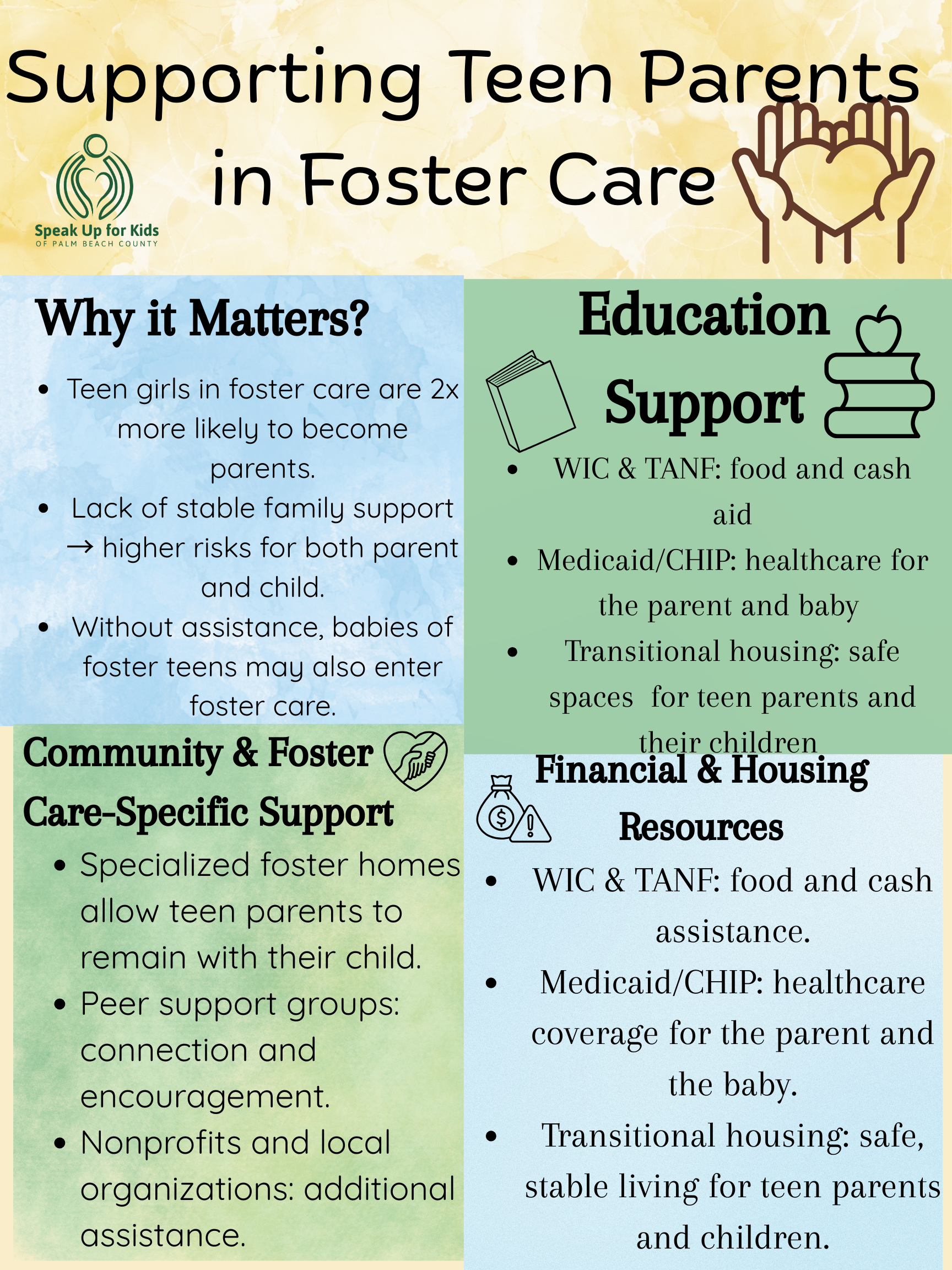
Education is a big part of assisting young parents to become stable and independent. Many schools and programs offer on-site childcare, flexible schedules, and academic tutoring so that teen parents can finish high school. Mentorship programs also provide emotional support and help these students plan for college or careers. By investing in education, communities give teen parents a fair chance to create a better life for themselves and their children.
Financial and Housing Resources
Teen parents in foster care sometimes have trouble getting the basics, including food, shelter, and medical care. Programs like TANF (Temporary Assistance for Needy Families) and WIC (Women, Infants, and Children) offer food and financial support to assist families. Both the parent and the infant receive necessary medical care thanks to Medicaid and CHIP. For those without a stable place to live, transitional housing programs and teen-parent foster homes offer safe, supportive environments where parents can focus on growth and parenting.
Parenting and Child Development Support
Raising a child requires wisdom and bravery. Numerous organizations provide parenting programs that teach vital skills, including safety, nutrition, and child care. Home visiting programs, where nurses or social workers regularly check in, provide hands-on support and connect parents to community services. Programs like Early Head Start also give children under five access to early education while helping parents learn about child development. These resources enable a parent and a kid to flourish together.
Community and Foster Care-Specific Support
Teen parents in foster care need not just financial aid, but also emotional and social support. In order to prevent separation and foster bonding, young parents might reside with their infants in specialized foster homes. Young parents are brought together by support groups and nonprofits such as Teen Parent Connection and YoungMoms to share experiences, alleviate feelings of isolation, and foster a sense of community. These connections can make a lasting difference in a young parent’s life.
Final Thoughts
Teen parents in foster care have more opportunities to raise happy, healthy children when they receive emotional support, housing, healthcare, and education. Every resource offered, such as a stable home or a mentor, reduces the likelihood that another kid will end up in foster care. Encouraging teen parents is about building stronger families and healthier communities, not simply assisting individuals.