

Finding a Job As You Age Out of Foster Care
Contributed by Speak Up for Kids Student Intern Team — This article was developed through the combined efforts of multiple student interns, each bringing unique skills and perspectives to support life skills education for foster youth.
Finding work, especially as you transition into adulthood from foster care, can be a challenging but essential part of gaining independence and financial stability. Whether you’re searching for your first job or looking to change careers, having a solid plan can make the process smoother and more successful. Here are some strategies and tips to help you navigate the job search.
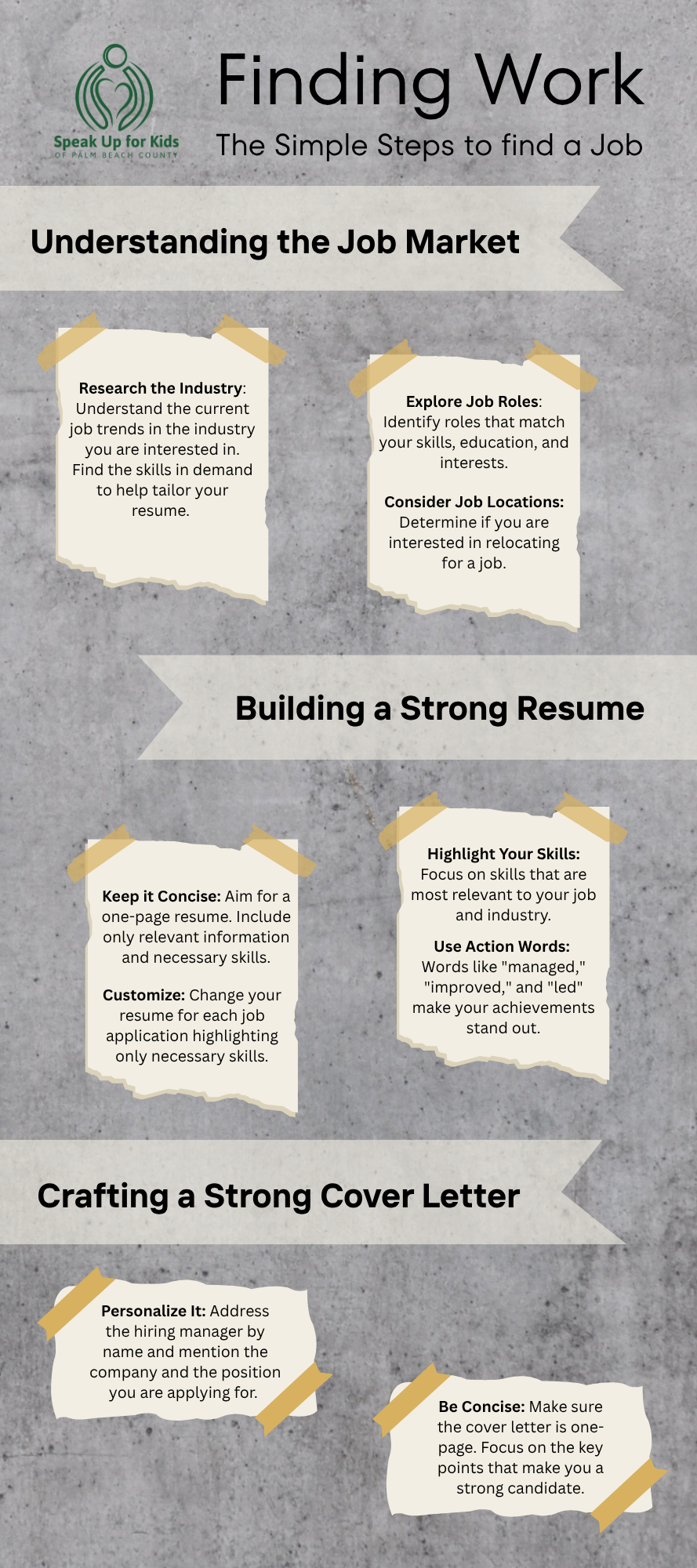
Understanding the Job Market
Research the Industry: Understand the current trends in the industry you’re interested in. Knowing what skills are in demand can help you tailor your job search and resume.
Explore Job Roles: Identify the types of roles that match your skills, education, and interests. This will help you focus your job search and apply for positions that are a good fit.
Consider Job Locations: Determine whether you’re open to relocating for a job or if you prefer to stay in your current area. This can influence the types of jobs you apply for.
Building a Strong Resume
Highlight Your Skills: Focus on the skills and experiences that are most relevant to the job you’re applying for. Use specific examples to demonstrate your abilities.
Use Action Words: Start bullet points with action verbs like "managed," "created," "improved," or "led" to make your achievements stand out.
Keep It Concise: Aim for a one-page resume if you’re just starting out. Include only the most relevant information and avoid unnecessary details.
Tailor Your Resume: Customize your resume for each job application. Highlight the skills and experiences that align with the job description.
Crafting a Compelling Cover Letter
Personalize It: Address the hiring manager by name if possible. Mention the company and position you’re applying for to show that you’ve done your research.
Explain Why You’re a Good Fit: Use the cover letter to explain how your skills, experiences, and career goals align with the job and the company’s needs.
Be Concise: Keep your cover letter to one page. Focus on the key points that make you a strong candidate without repeating everything in your resume.
Networking and Making Connections
Leverage Your Network: Reach out to friends, family, former coworkers, and mentors who might know of job openings or can provide referrals.
Use Social Media: Platforms like LinkedIn are powerful tools for professional networking. Keep your profile updated and connect with industry professionals.
Attend Job Fairs and Events: Job fairs, industry conferences, and networking events are great places to meet potential employers and learn about job openings.
Applying for Jobs
Set a Schedule: Treat your job search like a job itself. Set aside time each day to research job openings, fill out applications, and follow up with employers.
Use Job Search Engines: Websites like Indeed, Glassdoor, and LinkedIn are valuable resources for finding job listings. Set up job alerts to get notified of new postings.
Apply Early and Often: Don’t wait too long to apply for jobs, as positions can fill quickly. Apply to multiple jobs to increase your chances of landing an interview.
Preparing for Interviews
Research the Company: Before an interview, learn about the company’s history, mission, and culture. This will help you answer questions and show that you’re genuinely interested in the role.
Practice Common Questions: Prepare answers to common interview questions, such as “Tell me about yourself,” “What are your strengths and weaknesses?” and “Why do you want to work here?”
Dress Appropriately: Choose professional attire that fits the company’s culture. When in doubt, it’s better to be slightly overdressed than underdressed.
Follow Up: After the interview, send a thank-you email to express your appreciation for the opportunity and reiterate your interest in the position.
Navigating Job Offers
Evaluate the Offer: Consider the salary, benefits, work-life balance, and growth opportunities. Make sure the job aligns with your career goals and personal values.
Negotiate if Necessary: Don’t be afraid to negotiate the offer, especially regarding salary or benefits. Do your research to understand what’s fair for the role.
Take Your Time: If you receive a job offer, it’s okay to ask for a little time to consider it. Make sure you’re making the best decision for your career.
Continuing Professional Development
Keep Learning: Stay updated with new skills and trends in your industry. Consider taking online courses, attending workshops, or getting certifications.
Seek Mentorship: Find a mentor who can guide you through your career development. Their experience and advice can be invaluable.
Set Career Goals: Regularly reassess your career goals and create a plan for achieving them. Whether it’s gaining a promotion, switching fields, or learning a new skill, having clear goals will keep you motivated.
Conclusion
Finding work is a journey that requires persistence, preparation, and a proactive approach. By building a strong resume, networking effectively, and preparing for interviews, you can increase your chances of landing a job that aligns with your skills and career goals. Remember that every job search is a learning experience, and even setbacks can provide valuable lessons for future success.
Stay patient, keep refining your approach, and don’t hesitate to seek support from your network or professional services if needed. With the right strategies and mindset, you can find a job that not only meets your needs but also helps you grow and thrive in your career.