

Writing Your College Essay and Personal Statement
Contributed by Speak Up for Kids Student Intern Team — This article was developed through the combined efforts of multiple student interns, each bringing unique skills and perspectives to support life skills education for foster youth.
Overview
Writing a college essay or personal statement can feel intimidating, but it’s one of the most important opportunities you have to speak directly to admissions officers. Beyond grades and test scores, your essay shows who you are—your voice, your values, and the experiences that shaped you. To make the strongest impression possible, it’s essential to write with clarity, professionalism, and purpose. By understanding what colleges look for and learning how to present your story effectively, you can create a personal statement that stands out for all the right reasons.
Professionalism and Grammar
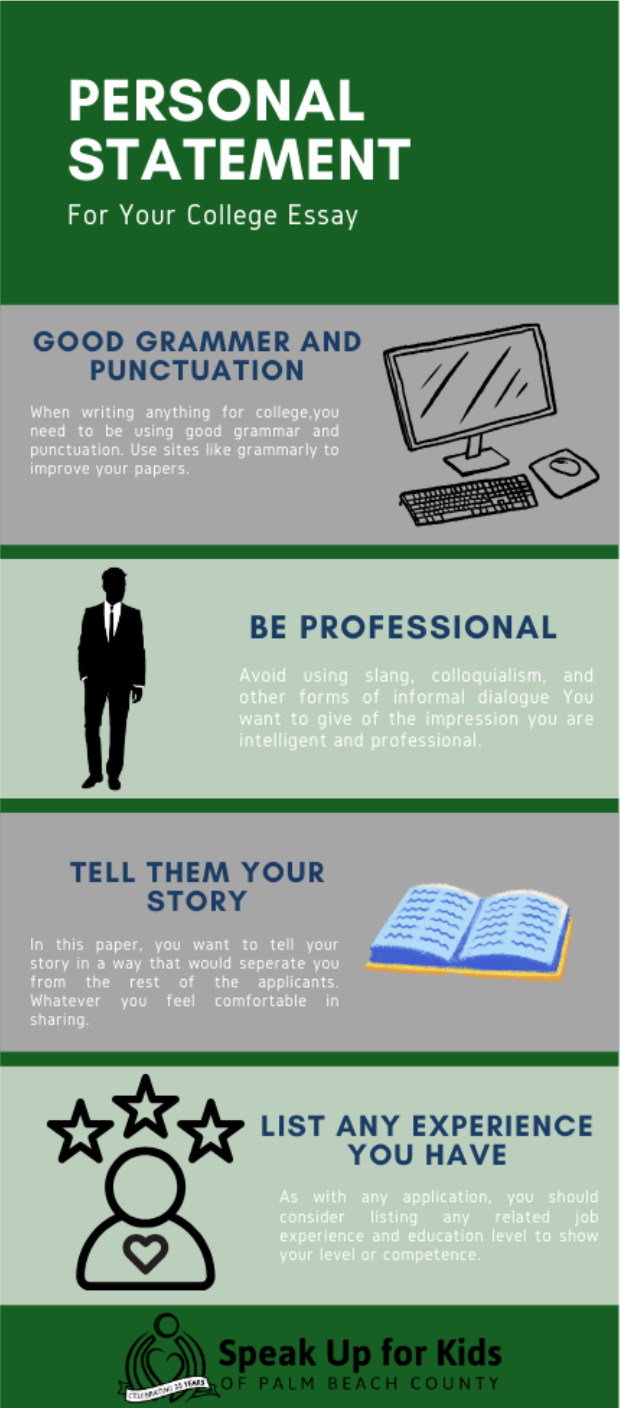
When you’re writing a college essay and your personal statement it is important to express good grammar, punctuation, and spelling. You want to express a level of professionalism and intelligence with the college admission process. Avoid using slang, colloquialism, and other forms of informal dialogue.
Tell Your Story
Here is where you want to tell prospective colleges your story and why you would be a great addition to their college. Tell them why your unique circumstances growing up equip you for the responsibility and demand that college will ask of you. Whatever you feel comfortable sharing and you feel is relevant to the essay, put into the essay. Talk about your accomplishments in school, where you volunteered, your job experience, sports you have played, and other certifications you might have.
Tips for Writing Your Statement
Writing a good college essay or personal statement is crucial for making a strong impression on admissions committees. Here are ten tips to help you craft a compelling and effective essay:
Start Early: Give yourself plenty of time to brainstorm, draft, and revise. Starting early reduces stress and allows time for thorough editing.
Be Authentic: Write in your own voice and be honest about your experiences and feelings. Authenticity resonates more than trying to guess what admissions officers want to hear.
Show, Don’t Tell: Use specific anecdotes and examples to illustrate your points rather than making general statements. This makes your essay more vivid and engaging.
Focus on a Unique Angle: Choose a topic or perspective that sets you apart. Highlight what makes you unique, whether it’s an unusual hobby, a personal challenge, or a significant achievement.
Be Concise: Stick to the word limit and be clear and concise in your writing. Avoid unnecessary words and tangents that dilute your message.
Highlight Growth and Learning: Discuss how your experiences have shaped you, what you’ve learned, and how you’ve grown. Admissions officers are interested in your personal development.
Proofread and Edit: Review your essay multiple times and seek feedback from teachers, mentors, or peers. Correct grammar, spelling, and punctuation errors, and refine awkward sentences.
Stay Positive: Focus on positive outcomes and what you’ve gained from experiences, even if they were challenging. A positive tone leaves a better impression.
Answer the Prompt: Ensure that your essay directly addresses the prompt or question. Staying on topic is crucial for a coherent and relevant essay.
Create a Strong Opening and Closing: Grab the reader’s attention with a compelling opening and leave a lasting impression with a memorable conclusion. The beginning and end are what readers often remember most.
Final Thoughts
Crafting a meaningful college essay takes time, reflection, and careful revision, but the effort is worth it. This is your space to highlight your character, accomplishments, and growth in a way no other part of your application can. By writing authentically, staying focused, and polishing your work, you give admissions committees a true picture of who you are and what you bring to their campus. With these tips in mind, you’ll be ready to create a compelling personal statement that not only meets expectations—but leaves a lasting impression.