

What Happens After You Are Arrested?
Contributed by Speak Up for Kids Student Intern Team — This article was developed through the combined efforts of multiple student interns, each bringing unique skills and perspectives to support life skills education for foster youth.
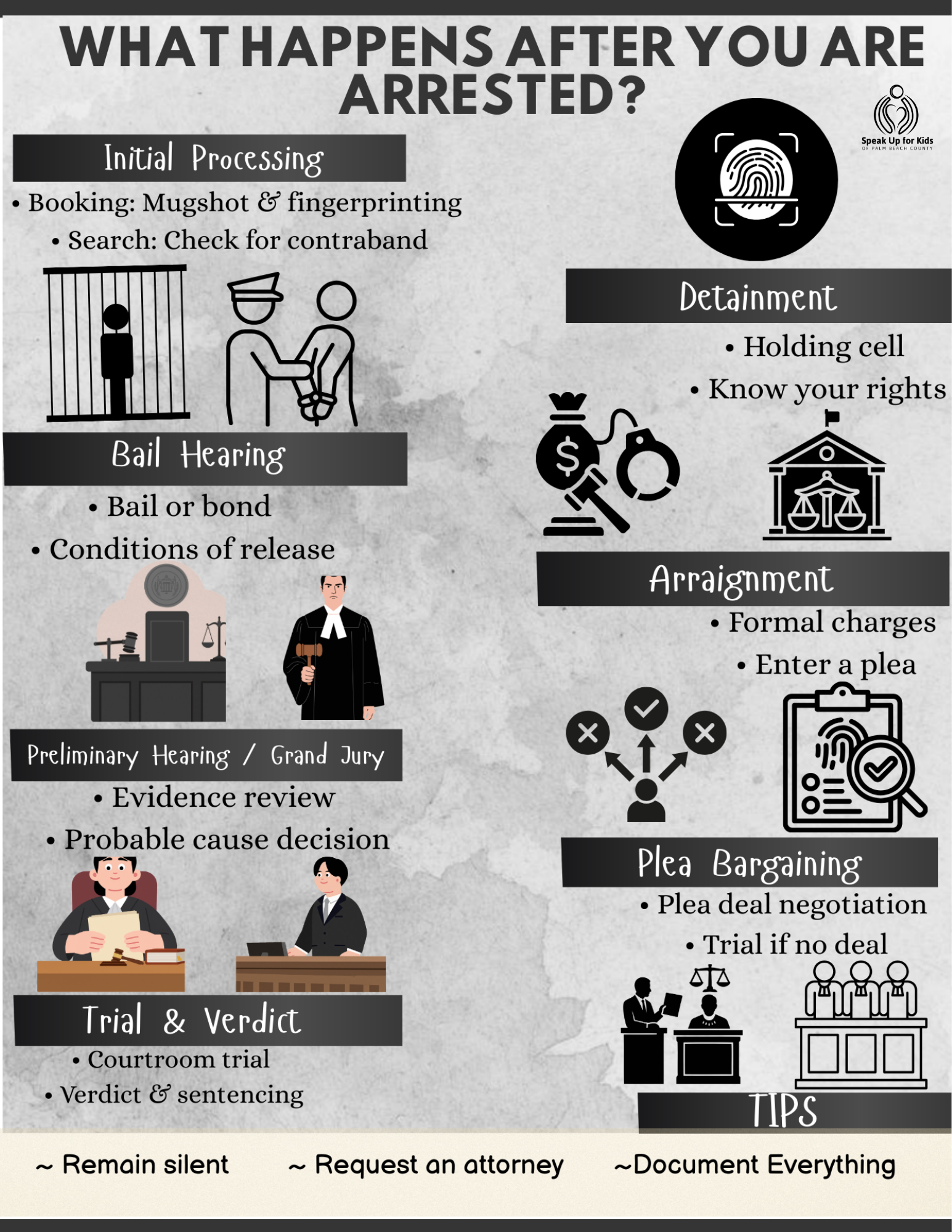
Overview
Being arrested can be a stressful and confusing experience. Understanding the process that follows an arrest can help you navigate the situation more effectively and ensure that you are aware of your rights and options. Here is a step-by-step guide on what typically happens after an arrest.
Steps
Initial Processing:
Booking: After being arrested, you will be taken to a police station or booking facility. During this process, your personal information will be recorded, and you will be photographed (for a mugshot) and fingerprinted. Search: You will be searched for any contraband or items that could pose a risk.
Detainment:
Holding Cell: You may be placed in a holding cell or detention area while your case is processed. Rights: You should be informed of your rights, including the right to remain silent and the right to an attorney.
Bail Hearing:
Bail or Bond: A bail hearing will determine whether you can be released from custody and under what conditions. Bail is a monetary amount set by the court that you must pay to be released before your court date. Conditions: If bail is granted, conditions may be set, such as restrictions on travel or contact with certain individuals.
Arraignment:
First Court Appearance: Your first court appearance is called an arraignment. At this hearing, you will be formally charged with a crime, and you will enter a plea (guilty, not guilty, or no contest). Legal Representation: It is advisable to have an attorney present at this stage to help you navigate the legal process.
Preliminary Hearing or Grand Jury:
Preliminary Hearing: In some cases, a preliminary hearing is held to determine whether there is sufficient evidence to proceed with a trial. Grand Jury: In other cases, the charges may be reviewed by a grand jury, which decides whether there is enough evidence to indict you and move forward with a trial.
Discovery and Preparation:
Evidence Review: Both the defense and prosecution will exchange evidence and prepare for trial. This process is known as discovery. Witnesses and Evidence: Your attorney will review the evidence, interview witnesses, and develop a defense strategy.
Plea Bargaining:
Negotiation: Before the trial, you may have the option to negotiate a plea deal with the prosecution. A plea deal involves pleading guilty to a lesser charge in exchange for a reduced sentence or other concessions. Decision: Consider the advice of your attorney when deciding whether to accept a plea deal or proceed to trial.
Trial:
Trial Process: If you do not reach a plea deal, your case will go to trial. During the trial, both sides will present evidence and arguments, and a judge or jury will decide your guilt or innocence. Verdict: After the trial, a verdict will be rendered. If found guilty, sentencing will follow.
Sentencing:
Sentencing Hearing: If you are convicted, a separate sentencing hearing will be held to determine your punishment. Penalties: Sentences can include fines, probation, community service, imprisonment, or other penalties.
Appeal:
Challenging Conviction: If you are convicted and believe there was an error in the legal process, you may have the option to appeal the conviction. This involves requesting a higher court to review the case and potentially overturn the conviction or reduce the sentence.
Tips
Exercise Your Rights: Remember to exercise your rights, including the right to remain silent and the right to an attorney.
Stay Calm: Try to remain calm and cooperate with law enforcement while being mindful of your rights.
Seek Legal Advice: Consult with a qualified attorney to guide you through the legal process and protect your rights.
Document Everything: Keep detailed records of all interactions with law enforcement and legal proceedings.
Final Thoughts
While every case is different, knowing what to expect can help reduce uncertainty during a stressful time. By understanding the steps that follow an arrest and being aware of your rights, you can make more informed decisions as your case moves through the legal process. If you or someone you know has been arrested, seeking guidance from a qualified attorney as early as possible can make a significant difference in protecting your rights and understanding the legal options available to you.