

Building Trust in Relationships
Contributed by Shyla Woodkurm — Speak Up for Kids Student Intern, a homeschooled student with a passion for writing and music, self-taught pianist, and historical fiction author who enjoys editing, storytelling, and faith-based community engagement.
Overview
Trust is something precious, like the last slice of cake. You want to give that last slice only to someone you know will take good care of it and enjoy it. You would never want to give it to someone who would chew it up, spit it out, and call it disgusting.
In the same way, trust must be given to the right people, cautiously and carefully. Many people in this world will break promises, hurt you, and make you question your trust in them. However, there are even more people who are willing to love, care for, and support you. Sometimes, when our trust has already been broken by past relationships, it can be extremely difficult to trust others, especially when it comes to identifying the right people to trust.
What Is Trust?
Nobody's Perfect
Trust isn't about assuming people are perfect and allowing them to control your life. Trust is a very special thing. You can't give your trust to just anyone, but it's important to understand where your comfort level lies in relationships.
Inherent Risk
Trust means believing that someone will act with good intentions and have your best interests at heart. It means risking a part of yourself, whether that involves trusting someone with your life, your thoughts and feelings, or something valuable to you.
Trust is one of the main ways relationships grow. It is essential for building stable, loving relationships, whether with family or friends. Trusting the wrong people can be difficult, messy, and sometimes painful, but don't let that discourage you from forming meaningful connections.
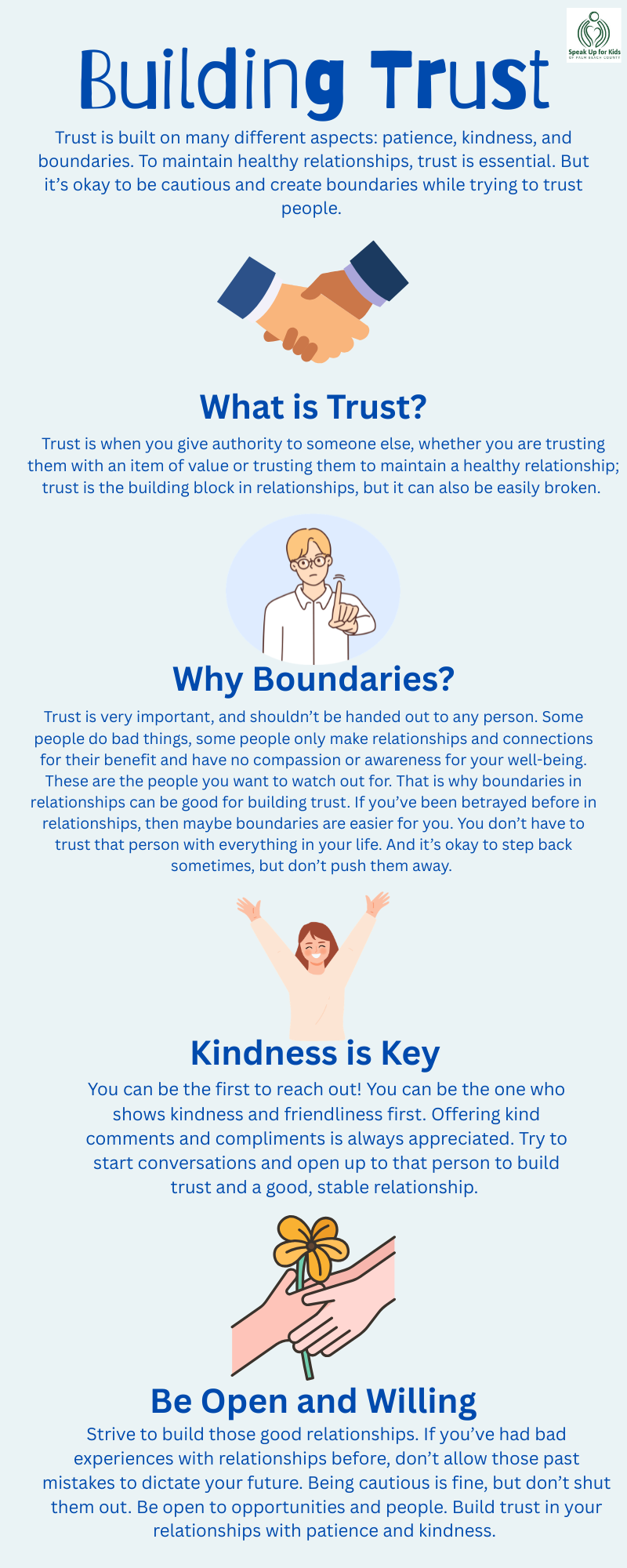
How to Build Trust in a Relationship
The Four Pillars of Trust – Practice these four things to increase trust in your relationships.
Patience
Give yourself time to build trust; don't hand it out freely. Start small and take time to learn more about the person you're trusting and what you're trusting them with. If you want to build a healthy relationship, it's best not to rush into the "trust thing" too quickly. If a relationship is meant to work, the effort and patience both people invest in it will pay off.
Boundaries
Create safe and reasonable boundaries in your relationships. What things do you feel comfortable sharing? What activities do you feel comfortable doing together? What would you prefer to keep to yourself until stronger trust has been built?
Boundaries are healthy, as long as you don't completely wall yourself off and refuse to let anyone into your life.
Observe
Pay attention to how a person treats the people they are close to. Are they kind? Do they keep their promises? Do they meet expectations?
The way someone treats the people around them often reflects how they will treat you. Observing how they handle their relationships can help you determine whether they are likely to treat you with the same level of care and respect. However, be mindful not to become intrusive or disrespectful of others' privacy while doing so.
Kindness
Building trust and healthy relationships requires open communication from both people. It's essential to discuss feelings honestly and work through problems together.
Showing kindness is key, whether through conversations, compliments, encouragement, or helping with tasks. Spending time together and participating in enjoyable activities can also strengthen your connection. Genuine kindness from the heart helps create meaningful and lasting relationships.
Things to Keep in Mind
Trust as a Foundation
Trust is one of the building blocks of relationships; without it, true connections cannot exist. However, trust can be easily broken. We may feel that we know someone well, only to be shocked by their betrayal. Experiences like this can bring back painful memories of past disappointments.
While it can be difficult to trust again after being hurt, it's important to remember that many kind and trustworthy people are still out there. Being mindful of whom we trust is important, but so is remaining open to healthy relationships.
Know When to Be Cautious
Be cautious when you observe someone:
Frequently lying, keeping secrets, or avoiding certain topics
Consistently blaming others and never taking responsibility
Disrespecting personal space or boundaries
Being pushy or aggressive
Making you feel guilty, uncomfortable, or ashamed
Caring only about themselves and showing little concern for others
Don't Be Afraid
It's normal to feel cautious about new relationships after experiencing betrayal or broken trust. Remember that while some people are untrustworthy, many others genuinely offer love, support, and care. If you avoid trusting anyone out of fear, you may miss out on valuable connections.
Don't let past experiences dictate your future. Every relationship is different. Be patient and take time to observe the person you're getting to know. Maintain healthy boundaries if you're unsure, but don't shut them out completely. Give them a chance, as they may be working just as hard to build trust as you are.
Final Thoughts
Remember that nobody's perfect, no matter how trustworthy they may seem. There is always some level of risk involved when extending trust to someone, but don't let that discourage you from building healthy and meaningful relationships.
Use the Four Pillars of Trust, Patience, Boundaries, Observation, and Kindness, to help establish stronger trust in your relationships.
Keep in mind that trust is a foundation of healthy relationships. It's also important to know when to be cautious if someone consistently avoids responsibility for their actions or fails to respect boundaries. Even so, don't be afraid to trust because of poor experiences in the past. Building trust requires intentional effort, patience, and a willingness to grow together.