

How to Stay Calm During an Argument
Contributed by Max Pour — Speak Up for Kids Student Intern, driven by a love for music and endurance sports, and committed to a future in communication and motivational speaking.
Overview
Arguments are an inevitable aspect of life, but they can always be handled in a respectful way if both parties are educated. When the level of fury starts to rise, you should be a better communicator and attempt to manage your emotions much more calmly, which will influence the other side to do the same. To stay cool and collected as the fight begins to intensify, you must follow these five rules carefully.
A Moment To Breathe
When frustration begins to build and a solution seems difficult to reach, taking a brief pause can help you regain control over your emotions. Choosing to step back and breathe is not a sign of weakness or defeat, it demonstrates self-awareness and a genuine desire to approach the situation with a clearer mindset.
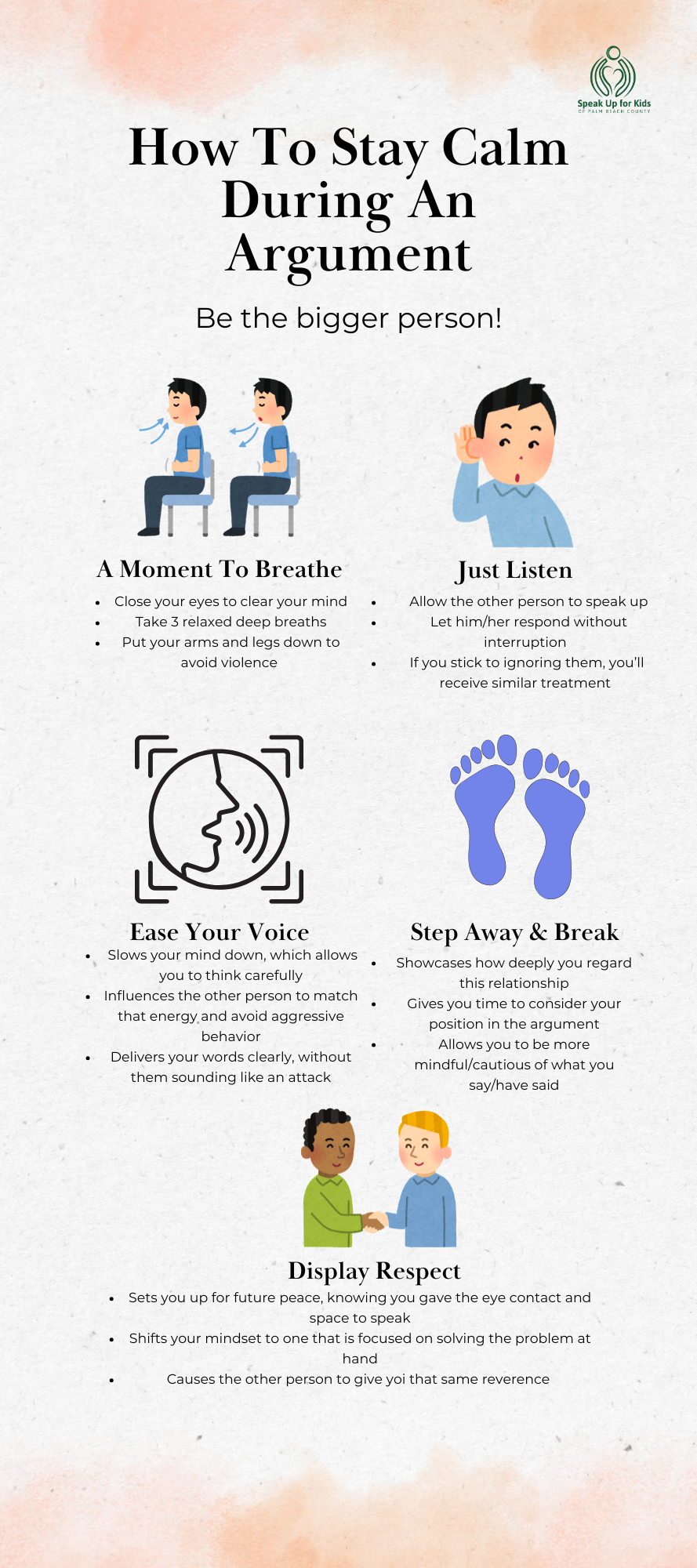
Try the following techniques to calm yourself:
Close your eyes for a moment to clear your thoughts and reduce emotional tension.
Take three slow, deep breaths, inhaling through your nose and exhaling through your mouth.
Relax your body by lowering your arms and releasing physical tension, helping prevent impulsive reactions caused by intense emotions.
A brief pause can create the mental space needed to respond thoughtfully rather than react emotionally.
Don’t Speak, Instead Listen
During a disagreement, progress cannot be made unless both individuals have the opportunity to express their thoughts and feelings. Many conflicts become worse because people misunderstand each other’s intentions or focus only on defending their own perspective.
Giving the other person a chance to speak allows misunderstandings to be clarified and demonstrates that you value their point of view. Ignoring someone’s concerns can create additional frustration and may cause the same lack of consideration to be reflected toward you.
Effective communication begins with the willingness to listen.
Control Your Tone of Voice
Raising your voice during an argument often makes it harder for your message to be understood. Instead of creating a path toward resolution, an aggressive tone can make the other person feel attacked and become more defensive.
Lowering your voice can help you regain control of the conversation by:
Allowing you to slow down your thoughts and avoid impulsive reactions.
Encouraging the other person to match your calmer approach.
Helping your words come across clearly instead of being interpreted as criticism or hostility.
The way you communicate is just as important as the message you are trying to deliver.
Step Away and Take a Break
Sometimes the most productive choice during a heated moment is to temporarily step away. Communicating that you need a break shows that you recognize the importance of resolving the issue without causing further harm.
Taking time apart allows you to collect your thoughts, manage your emotions, and prevent yourself from saying something you may later regret. It also demonstrates that you care about preserving the relationship rather than simply winning the argument.
A short break can provide both individuals with the opportunity to return to the conversation with a more respectful and solution-focused mindset.
Lead With Respect
Respect is the foundation of every meaningful conversation, especially during conflict. Showing respect does not mean that you agree with the other person; rather, it shows that you are willing to acknowledge their feelings while working toward a resolution.
Maintaining respect during an argument can:
Reduce lingering frustration because you know you gave the other person the attention and consideration they deserved.
Create a calmer environment where both individuals feel heard instead of judged.
Show emotional maturity by proving that your reactions are guided by self-control rather than anger.
Without respect, even valid points can become lost because the conversation becomes focused on emotions rather than solutions.
Final Thoughts
Arguments often come from disagreements, misunderstandings, or moments when emotions become difficult to manage. However, allowing anger to control your actions can damage trust and create problems that extend far beyond the original issue.
Choosing to remain calm and respectful allows you to approach conflict as an opportunity to solve problems rather than create further division. Your emotions may influence how you feel in the moment, but they do not have to determine how you respond. By practicing patience, active listening, and self-control, you can handle disagreements in a way that strengthens communication and preserves important relationships.