

Contributed by Speak Up for Kids Student Intern Team — This article was developed through the combined efforts of multiple student interns, each bringing unique skills and perspectives to support life skills education for foster youth.
If you’re heading to a four-year college or university, one of your first big decisions is where to live. Most schools offer on-campus housing, but many students eventually move into off-campus apartments. There’s no single right answer. The best choice depends on your needs, your budget, your college, and the area around it. Below, we’ll look at the pros and cons of living off campus, and then share tips for getting along with roommates wherever you end up.
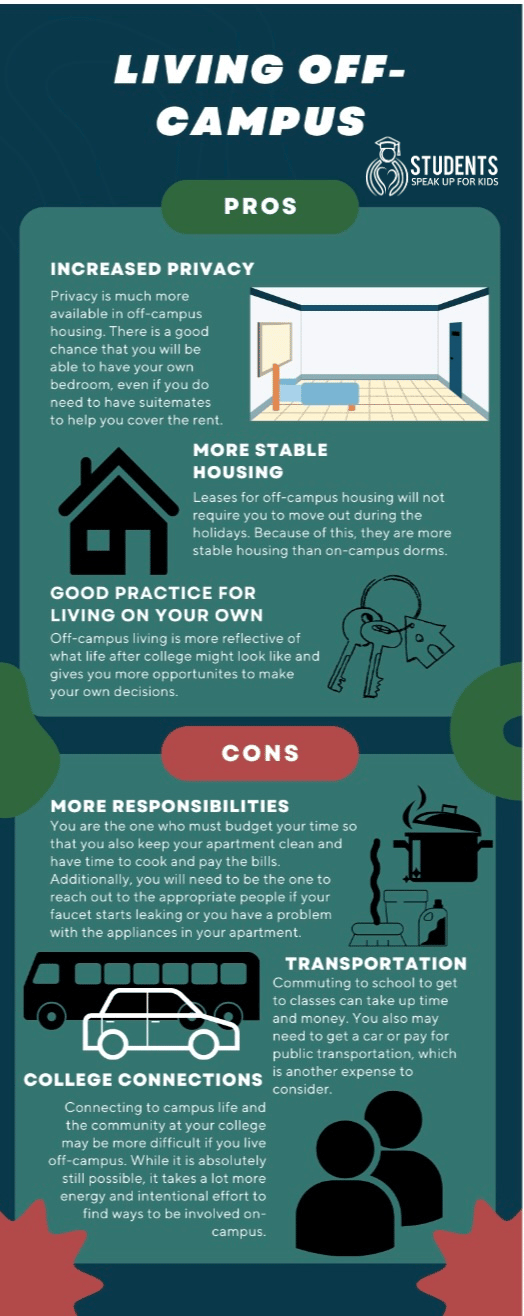
Living Off-Campus: Pros and Cons
Off-campus housing gives you more privacy, more stable housing year-round, and good practice for life after college. It also comes with more responsibility, extra transportation costs, and more effort to stay connected to campus life.
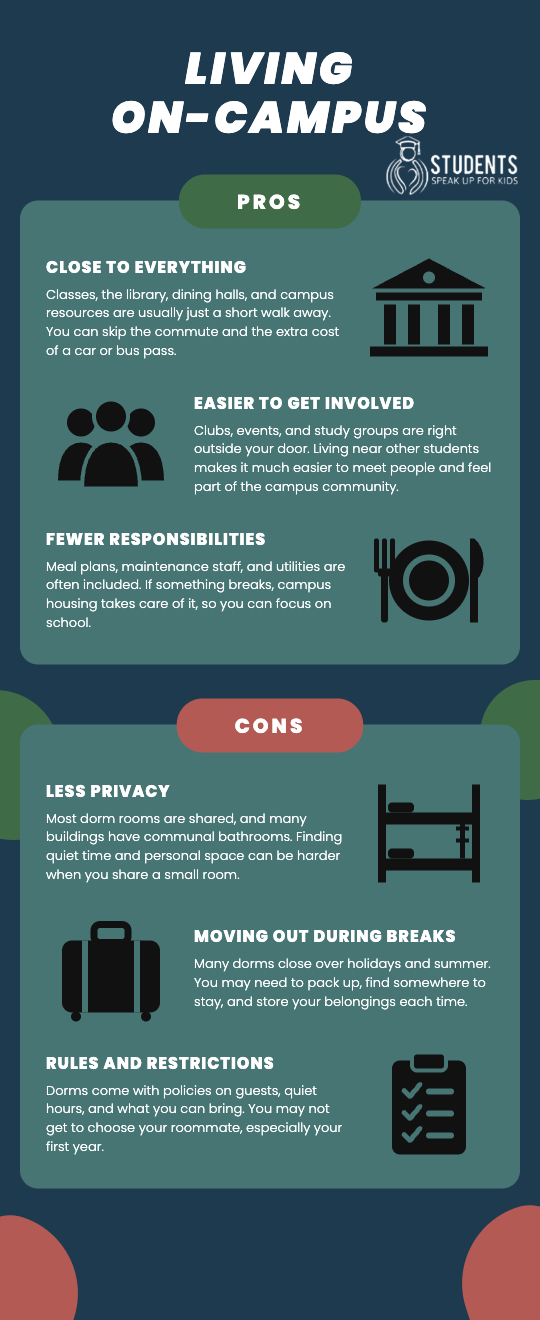
On-campus housing tends to be the opposite. Dorms put you close to classes, activities, and other students, and many day-to-day responsibilities like maintenance are handled for you. In exchange, you’ll usually have less privacy, and you may need to move out during holiday breaks. Think about which trade-offs matter most to you.
How to Get Along With Your Roommates
Whether you live on or off campus, there’s a good chance you’ll share your space with roommates. You don’t have to be best friends to be great roommates, but you do need to communicate. Here’s how:
Have a kickoff conversation. When you first move in, set a time for everyone to sit down and talk. How clean does everyone expect the space to be? How will you divide chores? Will you share food? Should people ask before borrowing things? How quiet should the space be? What’s the policy on guests?
Write down what you agree on. A roommate agreement might feel awkward, but having your rules in writing helps everyone stay clear on what you decided.
Address problems early. If something is bothering you, bring it up. A slightly uncomfortable conversation now can prevent big fights and misunderstandings later.
Prepare for difficult conversations. Jot down notes beforehand so you can still say what you meant, even if you get upset.
Use “I statements.” Focus on how you feel and how you see the situation, not on blaming others. Learn more about “I statements” here.
The right housing and good communication with roommates can make college feel like home, wherever you live.