

Conversational Tips Series
Contributed by Speak Up for Kids Student Intern Team — This article was developed through the combined efforts of multiple student interns, each bringing unique skills and perspectives to support life skills education for foster youth.
Overview
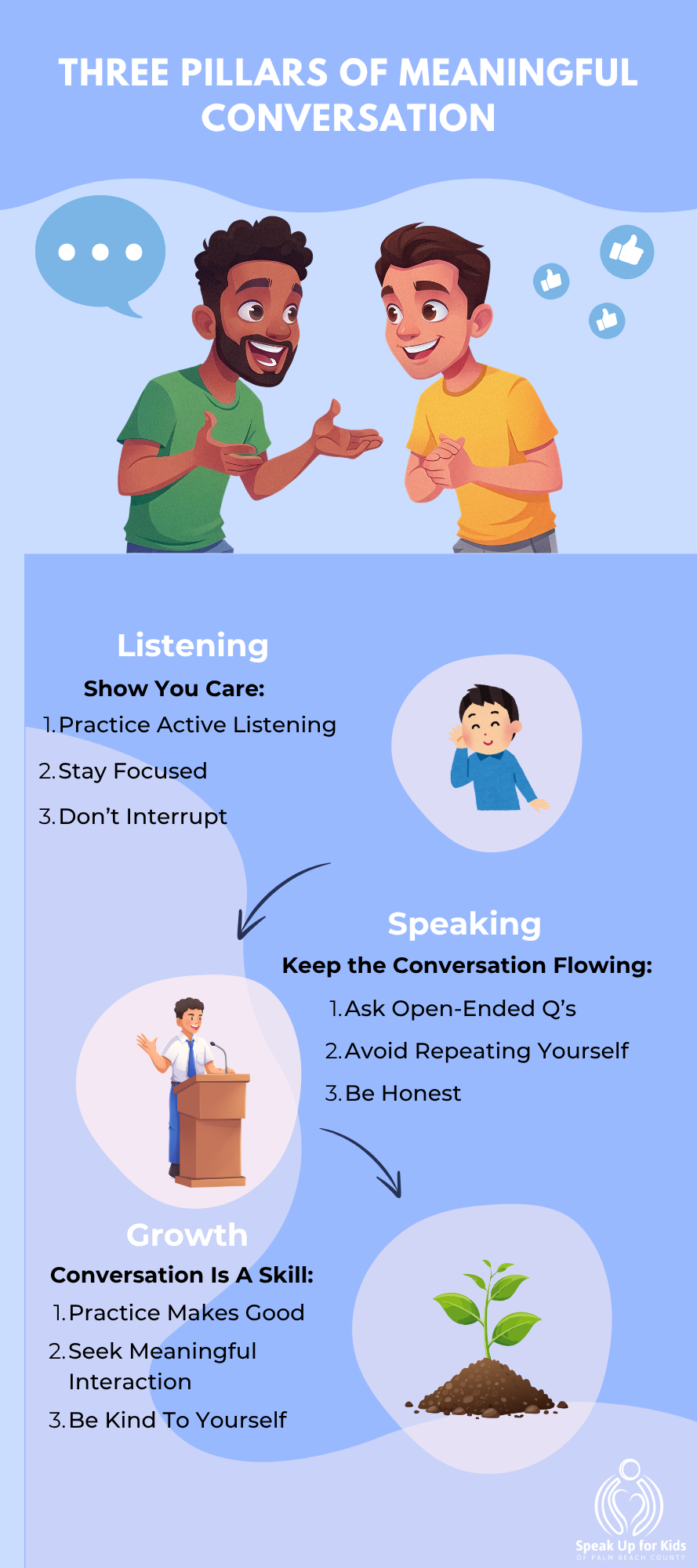
Learning how to engage in meaningful conversations whether in casual or professional settings can be a difficult thing to navigate. Below we’ll take a look at a series of tips to help you become better at having conversations with others that fall under two main domains: Listening and Speaking, as well as some good General Tips to keep in mind.
Listening Tips:
Active Listening:
It’s important to show people you’re talking with that you’re paying attention to what they’re saying.
Some ways you can practice Active Listening is by maintaining eye contact, nodding, and orienting your body towards the person or people you’re speaking with.
Focus on the Conversation:
Make sure you’re portraying that you’re engaged in the conversation you’re having.
Staying off your phone, not looking around or swaying your body, and eliminating other distractions can help show that you’re focused and giving others your attention.
Don’t Interrupt:
Interrupting the person who’s speaking, even if you have something to contribute, can come off as rude or as if you’re not interested in what they have to say.
If you have something to add, wait until the person is finished speaking and then say what you want to say. You can also interject with “excuse me” or “sorry to interrupt” to interrupt politely if you have something you feel needs to be added to the conversation immediately.
Speaking Tips:
Ask Open-Ended Questions:
Asking “yes” or “no” questions isn’t very effective at continuing a conversation.
If you’re trying to keep a conversation going, use Open-Ended Questions as they show more interest and require both parties to be more thoughtful about their questions and responses.
For example, instead of asking someone “Did you like what you had for lunch today?” you can make that question open-ended by saying “Why did or didn’t you like what you had for lunch today?” The former sentence requires someone to consider their response more than just a “yes” or “no” question.
Try Not to Repeat Yourself:
Restating information or topics already discussed can cause a conversation to feel drawn out or like it’s not going anywhere.
Take some time before you speak to more intentionally consider what you’re going to say. A slow and steady approach to speaking can help you be more clear and avoid repeating things you’ve already talked about.
Be Honest:
Don’t just say things to keep a conversation going, not only is it rude, it’s also fairly obvious when someone doesn’t know what they’re talking about.
Don’t be afraid to open up, sharing some of the things you enjoy or find interesting with what the other person has said. Try to have a meaningful back and forth with people you speak with and keep the conversation going until it naturally concludes
General Tips:
Practice Makes Good:
Nobody’s amazing at conversing right out of the gate, it’s a skill that requires effort and time to fully develop.
If you’re intentional about becoming better at conversation, practice, and seek out resources to help learn how to do it better, you’ll be able to continually build upon your skill set and get to a place you’re comfortable with.
Seek Out Meaningful Interactions:
Have goals in mind when you start a conversation with someone. Are you trying to learn something about the person? Do you need to ask them for help with something?
Sometimes it can help to create a short checklist in your mind of points you want to hit before you speak to someone.
Be Kind to Yourself:
We have a tendency to overanalyze our mistakes and attribute that as a personal failure instead of a momentary setback.
Don’t be afraid to make mistakes, that’s how we learn!
Final Thoughts
There are three main Listening Tips to keep in mind when engaging in conversation. To Listen Actively, you should maintain eye contact, orient your body towards the speaker, and nod to show them that you’re listening to what they’re saying. Next, make sure that you’re Focused on the Conversation, which can be achieved by staying off your phone and eliminating other distractions. Make sure that you Don’t Interrupt the person speaking, but if you really need to, then make sure to do so politely.
There are also three Speaking Tips you should keep in mind. Ask Open-Ended Questions to help push the conversation forward and require both parties to be more thoughtful with their responses. Try Not to Repeat Yourself, and take time before you speak to consider what you’re going to say. Make sure to Be Honest in the spirit of having a real conversation with someone.
Finally, there are three important General Tips for conversations to be mindful of. Practice Makes Good, be intentional about improving and you’ll become better with conversations in no time! Seek Out Meaningful Interactions, make a plan before you speak and make sure to hit all the points you want to. Don’t forget to Be Kind to Yourself as well, we all make mistakes in conversations, but learning from them helps us learn!