

How To Sign Your First Lease
Contributed by Aditi Amin — Speak Up for Kids Student Intern, a sophomore at Fulton Science Academy, passionate about artificial intelligence, cybersecurity, mental health advocacy, and using technology to create meaningful change.
Overview
Signing your first lease is a big step toward living independently. A lease is a legal agreement between you and your landlord that explains your responsibilities, your landlord’s responsibilities and the rules you must follow while living in the home.
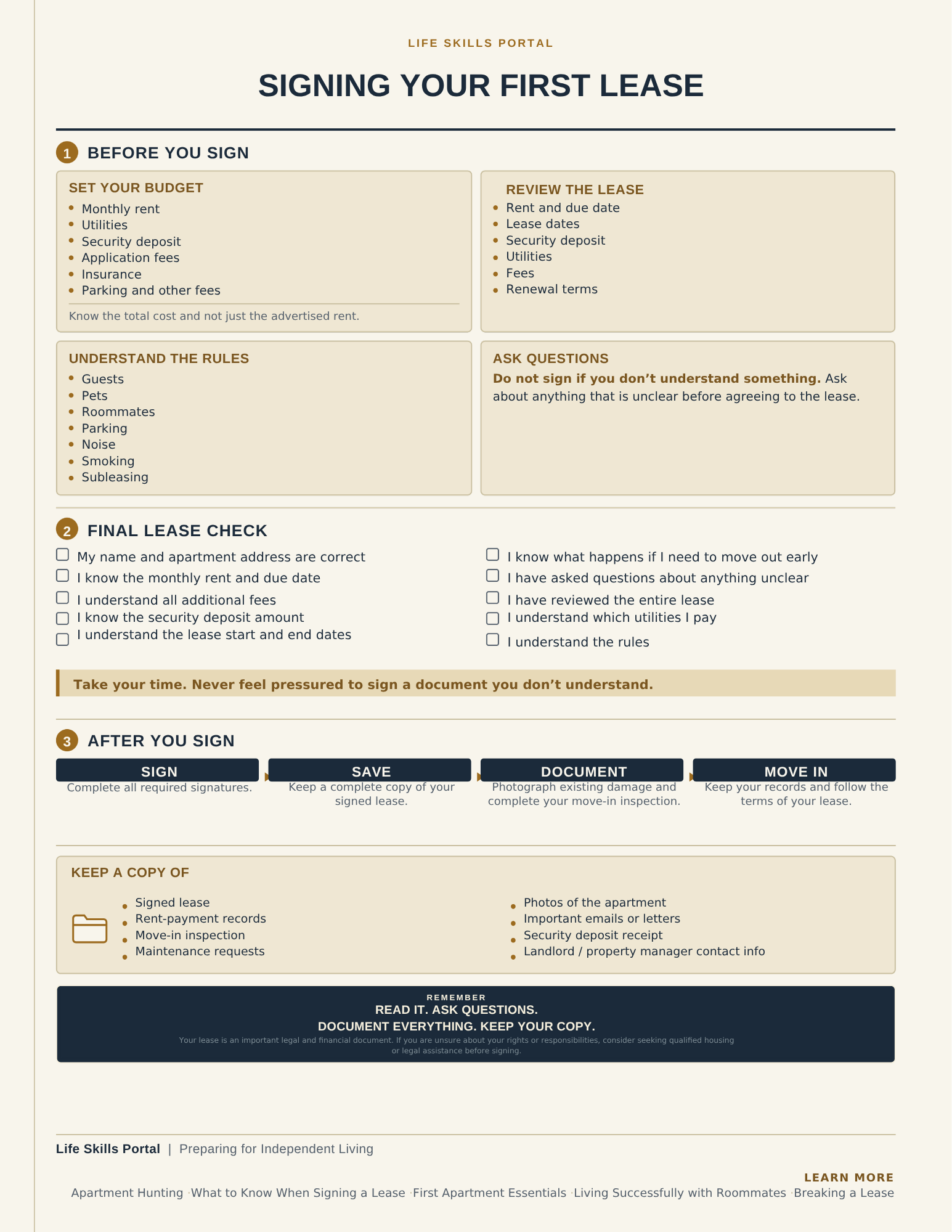
It can feel overwhelming to read a lease for the first time, but you do not have to figure it all out at once. Taking the process step-by-step can help you understand what you are agreeing to before you sign.
Remember: A lease can create legal obligations. If you are unsure about a term or condition, ask questions and consider getting help before signing.
Step 1: Find an Apartment You Can Afford
Before signing a lease, make sure the apartment fits your budget.
Rent is only one part of the cost of living on your own. You may also need to pay for:
Security deposit
Application fees
Utilities such as electricity, water, or gas
Internet
Renter’s insurance
Parking
Pet fees or pet rent
Moving expenses
Furniture and household supplies
HUD notes that renters may have several upfront expenses when moving into a home, including application fees, security deposits, first month's rent, moving expenses, and utility connection fees.
Before choosing an apartment, make a monthly budget that includes both rent and other expenses.
For more help finding a place to live, see Apartment Hunting and Your First Apartment: A Young Adult's Guide to Living Independently
Step 2: Apply for the Apartment
Once you find an apartment you like, you will usually need to complete a rental application.
A landlord or property manager may ask for information such as:
Your name and contact information
Employment and income information
Previous rental history
References
Identification
Permission to check your credit or tenant-screening history
Some landlords may require a co-signer if you do not meet their income or credit requirements.
Before paying an application fee, ask what the fee covers and what the requirements are to qualify.
Keep copies of your application and any documents you submit.
Step 3: Review the Lease Before You Sign
Never feel pressured to sign a lease without reading it.
A lease can be several pages long, but every section matters. Read it carefully and make sure you understand what you are agreeing to.
Pay particular attention to:
The Property
Make sure the lease identifies the correct:
Address
Apartment or unit number
Parking space, if applicable
Storage space, if applicable
Rent
Look for:
Monthly rent
Due date
Accepted payment methods
Late fees
Other required monthly charges
Security Deposit
Find out:
How much the deposit is
When it must be paid
What can cause money to be deducted
How and when the deposit will be returned
Security-deposit rules vary by state and local law, so check the rules where you live.
Lease Term
Check:
Move-in date
Lease expiration date
Whether the lease automatically renews
What happens when the lease ends
Repairs and Maintenance
Your lease should explain who is responsible for different types of maintenance and repairs.
Make sure you understand what you are expected to fix yourself and what you should report to your landlord.
Utilities
Determine which utilities are included in your rent and which ones you must pay separately.
Do not assume a utility is included just because it was included at another apartment. Check your lease.
Step 4: Understand the Rules
Most leases contain rules about how you can use the property.
Look for rules regarding:
Pets
Smoking
Guests
Noise
Parking
Decorating or painting
Subleasing
Roommates
Maintenance
Alterations to the property
If you plan to live with someone else, make sure you understand how the lease treats roommates and whether everyone needs to be listed on the lease.
For more information, read Living Successfully with Roommates.
Step 5: Ask Questions Before Signing
If you don't understand something, ask before you sign and not after.
You can ask your landlord or property manager questions such as:
"What does this fee cover?"
"Who pays for this utility?"
"What happens if I need to move out before the lease ends?"
"Does the lease automatically renew?"
"What happens if I need to add a roommate?"
"How do I submit a maintenance request?"
"What happens to my security deposit when I move out?"
If a landlord or property manager changes something you discussed, ask for the change to be included in the written lease rather than relying on a verbal promise.
Step 6: Look for Anything You Don't Agree With
Do not assume that everything in a lease is automatically negotiable—or automatically legal.
A lease is a contract, and state and local laws may provide additional protections for renters. Tenant rights can vary depending on where you live.
If you see something you don't understand, ask for clarification.
If you believe a lease term violates your rights, consider contacting a qualified legal-aid organization or housing counselor before signing.
Step 7: Complete the Move-In Inspection
Before moving your belongings into the apartment, document its condition.
Walk through the entire property and look for existing damage.
Check things such as:
Walls and ceilings
Floors and carpets
Doors and locks
Windows
Cabinets
Appliances
Bathroom fixtures
Lights
Heating and cooling systems
Smoke and carbon monoxide alarms
Take dated photos or videos of anything that is damaged or needs repair.
If your landlord provides a move-in inspection checklist, complete it carefully and return it by the required deadline.
Keep a copy for your records.
This documentation can be especially useful when you eventually move out and the condition of the property is being evaluated.
Step 8: Sign and Keep Your Lease
Once you understand the lease and are ready to move forward, sign the agreement according to the landlord's instructions.
Before you leave, make sure you receive a complete copy of the signed lease.
Save it somewhere you can easily access it.
You may also want to keep copies of:
Move-in inspection forms
Receipts for deposits and fees
Rent-payment records
Emails or letters from your landlord
Maintenance requests
Photos from your move-in inspection
Keeping good records can make it much easier to answer questions or resolve disagreements later.
Step 9: Pay Your Move-In Costs
Your lease should explain what you owe and when payments are due.
Depending on the rental, you may have to pay:
First month's rent
Security deposit
Application or administrative fees
Pet-related fees
Parking fees
Utility deposits
Other charges listed in the agreement
Make sure you understand every charge before paying it.
Keep receipts or other proof of payment.
Step 10: Know Your Responsibilities After You Sign
Signing the lease is only the beginning.
As a renter, you generally need to:
Pay rent on time
Follow the lease rules
Take reasonable care of the property
Report problems promptly
Follow procedures for requesting repairs
Keep records of important communications
Follow the required process if you decide to move
Your exact responsibilities depend on your lease and applicable state and local laws.
If you eventually need to leave before your lease ends, do not simply move out without checking your lease first. Breaking a lease can have financial or legal consequences.
See Breaking a Lease to learn more.
What If Something Goes Wrong?
Sometimes problems happen even when you carefully follow your lease.
If you have a disagreement with your landlord:
1. Read your lease.
Look for the section that addresses the issue.
2. Communicate in writing.
Keep copies of emails, letters, maintenance requests, and other important communications.
3. Know your rights.
Tenant protections vary by state and local law. USA.gov provides information about tenant rights and where to seek help.
4. Get help if necessary.
If you cannot resolve the problem, you may be able to contact a local housing agency, legal-aid organization, or housing counselor.
You may qualify for free or low-cost legal assistance depending on your situation.
Before You Sign: Your Quick Checklist
Use this checklist to make sure you have covered the basics.
BEFORE SIGNING
I know the monthly rent.
I know when rent is due.
I understand all additional monthly fees.
I know how much the security deposit is.
I understand the lease start and end dates.
I know which utilities I am responsible for.
I understand the rules about pets, guests, parking, and roommates.
I understand the maintenance and repair responsibilities.
I know what happens if I need to move out early.
I have asked questions about anything I don't understand.
I have received a copy of the lease to review before signing.
WHEN SIGNING
All required people have signed.
I received a complete copy of the signed lease.
I have proof of my payments.
I saved the landlord/property manager's contact information.
BEFORE MOVING IN
I completed the move-in inspection.
I photographed existing damage.
I reported existing problems to the landlord.
I saved my inspection form and photos.
I know how to submit maintenance requests.
I know how to pay my rent.
Final Thoughts
Your lease is an important document. Take your time, understand what you're agreeing to, and ask for help when you need it.
More Life Skills Portal Resources
Once you've learned the basics of signing your first lease, these resources can help you with the rest of the process:
What to Know When Signing A Lease
Living Successfully with Roommates
Your First Apartment: A Young Adult's Guide to Living Independently
You're not expected to know everything on your first day of independent living.
Learning how leases work, asking questions, keeping organized records, and knowing where to find help can make the transition to independent living much easier.