

Managing Anxiety
Contributed by Speak Up for Kids Student Intern Team — This article was developed through the combined efforts of multiple student interns, each bringing unique skills and perspectives to support life skills education for foster youth.
Overview
Anxiety is something that affects all of us throughout our lives. Whether anxiety stems from a clinically diagnosable condition or from something as simple as waving to a stranger as you pass by, it is a normal emotion to experience. According to the National Institute of Mental Health (NIMH), 19.1% of adults in the United States experienced an anxiety disorder in the past year. That’s roughly 49 million individuals! When anxiety becomes more persistent, it can negatively affect a person’s ability to function in daily life. However, there are effective, evidence-based, and healthy ways to manage it.
Recognize It
One of the most important parts of managing anxiety is recognizing and accepting that you are experiencing it in the first place. Anxiety can take many different forms depending on the individual and their environment. Here are some of the most common symptoms of anxiety:
Common Symptoms of Anxiety
Feelings of tiredness or excessive fatigue
Difficulty sleeping
Trouble focusing
Difficulty making decisions
A heightened “fight-or-flight” response
Persistent worry about the future
Muscle tension
Frequently feeling that something bad is about to happen
Sweating
Increased heart rate
Combating Anxiety
Because anxiety has been so widespread for so long, people have developed many effective ways of managing it. This section explores both proactive and reactive methods of dealing with anxiety. Proactive methods are things you can do to help prevent or reduce anxiety before it becomes overwhelming, while reactive methods are strategies you can use in direct response to feelings of anxiety.
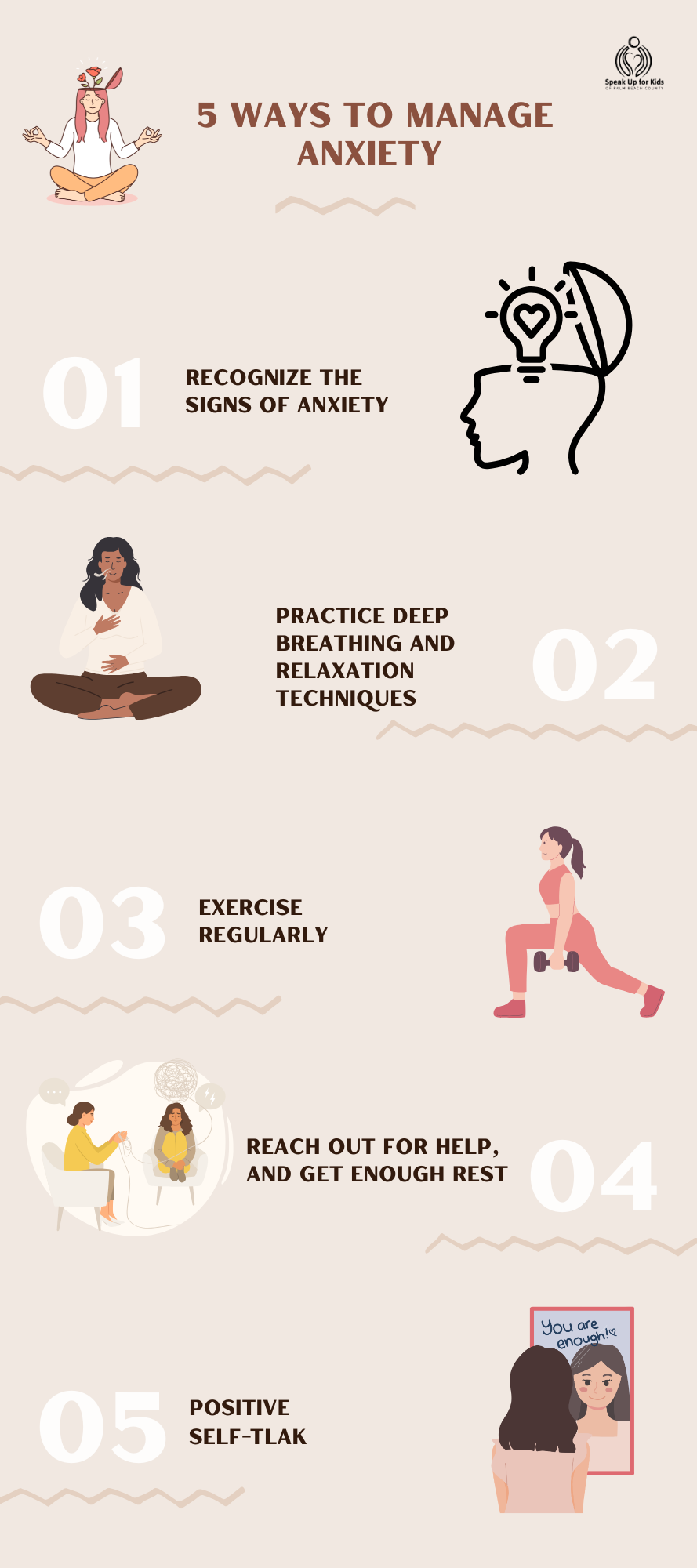
Deep Breathing
This reactive method is one of the easiest and most common ways to reduce anxiety. Breathing in for three seconds, holding your breath for three seconds, and then breathing out for three seconds offers several benefits. This controlled breathing pattern tells your body to relax on a physiological level. In this case, breathing signals to your nervous system that its fight-or-flight response was a false alarm and helps regulate your breathing, slow your heart rate, and relax your muscles.
Additionally, deep breathing provides a mental “reset” by shifting your attention away from the source of your anxiety and toward something intentional and controlled.
Exercise
Exercise is a proactive method of anxiety management and acts as a natural mood booster. When you exercise—whether by going for a run, taking a walk, or doing push-ups—your body releases chemicals called endorphins, which can reduce stress and improve your mood.
When exercising to manage anxiety, it is important to choose activities that feel enjoyable rather than burdensome. Finding forms of exercise that you genuinely enjoy can make you look forward to being active and increase its effectiveness in reducing anxiety.
Exercise also provides an opportunity to distance yourself from the source of your anxiety and to recenter, refocus, and recharge. Recentering allows you to step away from anxious thoughts, refocusing gives your mind something productive to concentrate on, and recharging afterward helps you collect your thoughts and regain perspective.
Positive Self-Talk
Positive self-talk can be both a proactive and reactive method of managing anxiety. It is one of the most effective tools for combating anxiety, but it can also be one of the most difficult to practice consistently.
Positive self-talk should be uplifting, supportive, and, most importantly, kind. Examples include statements such as, “I can’t do this yet,” or, “I made a mistake, but I can improve.”
When dealing with anxiety, it can be easy to become overwhelmed by self-doubt and feelings of inadequacy. Positive self-talk helps shift your mindset from one filled with worry and anxiousness to one that promotes a more optimistic outlook, often referred to as a “can-do attitude.”
Although it can be difficult to replace automatic negative thoughts with positive ones, the more you practice positive self-talk, the easier it becomes. Over time, those automatic negative responses can gradually transform into more positive and constructive ones.
Final Thoughts
These are just a few of the many ways we can manage anxiety. The first step is identifying that we are experiencing anxiety and determining what may be causing it. From there, we can use a variety of proactive and reactive strategies to address it.
Deep breathing can help signal to our bodies that it is time to relax. Exercise can release chemicals that improve our mood and help reduce stress. Positive self-talk can help us reframe our thinking and focus more on positive possibilities rather than negative outcomes.
The most important part of managing anxiety is finding the strategies that work best for you. Whatever methods you choose, consistency and effort are key. The first step is often the hardest, but as you build momentum and continue practicing healthy coping strategies, you can make meaningful progress toward a healthier state of mind.