

What is Roadside Assistance?
Contributed by Speak Up for Kids Student Intern Team — This article was developed through the combined efforts of multiple student interns, each bringing unique skills and perspectives to support life skills education for foster youth.
Overview
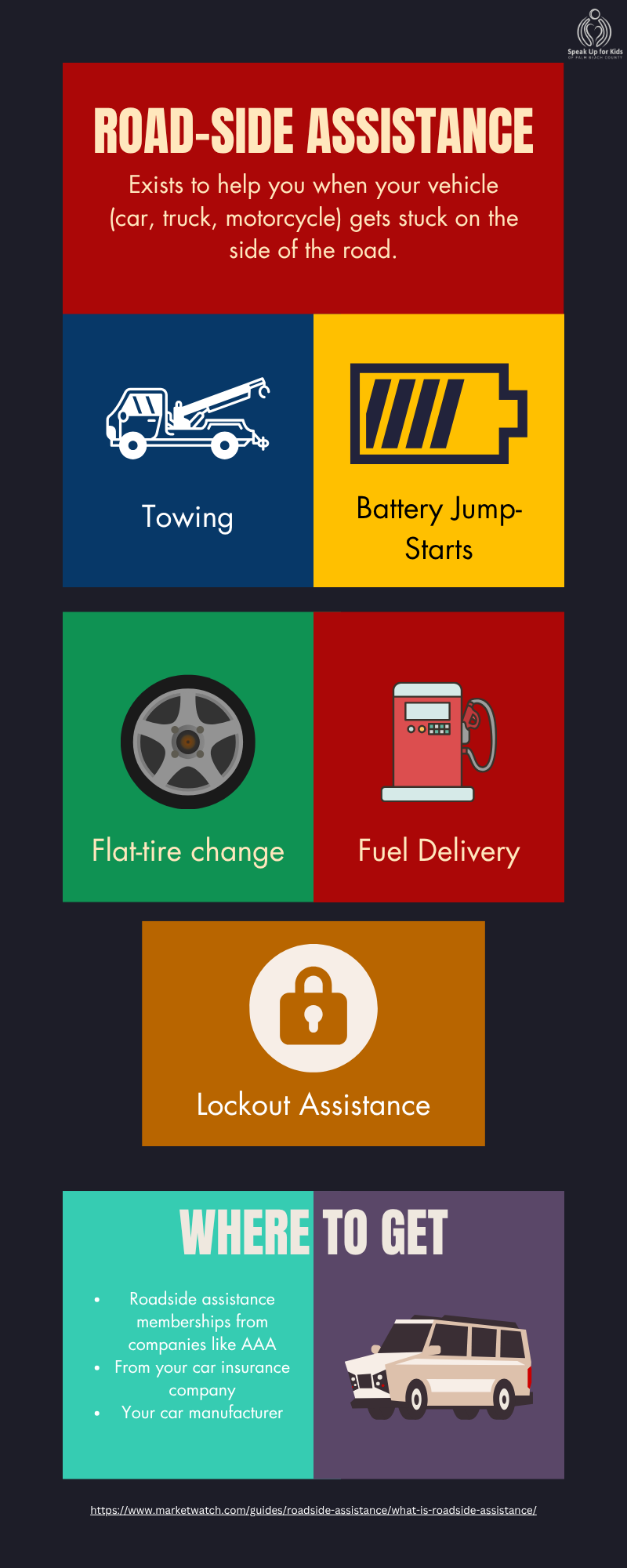
Roadside assistance is a service designed to help drivers when they experience a vehicle breakdown or emergency while on the road. Services may include towing, battery jump-starts, tire changes, fuel delivery, and lockout assistance. Understanding what to expect and how to use roadside assistance can help you handle unexpected situations with confidence. This guide explains what roadside assistance includes and how to use it effectively.
Steps:
Understand Your Roadside Assistance Coverage
Types of Services:
Familiarize yourself with the services covered by your roadside assistance plan, such as towing, tire changes, fuel delivery, battery jump-starts, and lockout assistance.
Plan Details:
Review the details of your roadside assistance plan, including any limitations, exclusions, or restrictions. Determine whether there are additional costs for services that exceed your basic coverage.
Know How to Access Roadside Assistance
Emergency Contact Number:
Keep your roadside assistance contact number readily available. This number is often found on your insurance card, membership card, or through your vehicle manufacturer's mobile app.
Mobile Apps:
Many roadside assistance providers offer mobile apps that allow you to request help quickly and conveniently. Download the app, if available, and set up your account in advance.
Prepare Your Vehicle Information
Vehicle Details:
Have your vehicle information ready, including the make, model, year, and license plate number. This information helps the roadside assistance provider locate and assist you more efficiently.
Location Details:
Provide a clear and accurate description of your location. If possible, use nearby landmarks, mile markers, or GPS coordinates to help the provider find you quickly.
Request Assistance
Call or Use the App:
Contact roadside assistance by phone or through the mobile app. Clearly explain your situation and provide your location.
Provide Necessary Information:
Share all relevant details, including your vehicle information, location, and the nature of the problem. Follow any instructions provided by the representative.
Stay Safe While Waiting
Pull Over Safely:
If possible, move your vehicle to a safe location, such as the shoulder of the road or a nearby parking lot, to reduce the risk of further hazards.
Remain in Your Vehicle:
If you are on a busy roadway, stay inside your vehicle with the doors locked and remain alert while waiting for assistance to arrive.
Verify the Service
Confirm Identification:
When the roadside assistance provider arrives, verify their identification and confirm that they are associated with your service provider.
Review the Service Provided:
Ensure that the service being performed matches what you requested and is covered under your plan.
Follow Up
Check the Vehicle:
After the service is completed, confirm that your vehicle is operating properly and that the issue has been resolved.
Review Any Costs:
If there are charges beyond your coverage, review them carefully and make sure you understand what they are for. Keep any receipts or documentation for your records.
Key Questions
What Services Are Covered?
What roadside assistance services are included in my plan?
Are there any limitations, exclusions, or coverage restrictions?
How Do I Access Roadside Assistance?
What is the roadside assistance contact number, and where can I find it?
Is there a mobile app available, and how do I use it to request help?
What Information Should I Prepare?
What vehicle and location information should I have ready when requesting assistance?
How can I clearly and accurately describe my situation to the roadside assistance provider?
What Should I Do While Waiting for Assistance?
How can I stay safe while waiting for help, especially on a busy road?
What precautions should I take to remain secure in my vehicle?
How Do I Verify the Service?
How can I confirm the identity of the roadside assistance provider?
What should I check to ensure the service provided is accurate and covered under my plan?
What Are the Follow-Up Steps?
How can I verify that the issue has been resolved and that my vehicle is in proper working condition?
What should I do if there are additional costs, and how should I document them?
Tips
Keep Important Information Accessible: Store your roadside assistance contact information and membership details in your phone or vehicle for easy access.
Perform Regular Vehicle Maintenance: Routine maintenance can reduce the likelihood of breakdowns and minimize the need for roadside assistance.
Stay Calm During Emergencies: If you encounter a roadside emergency, remain calm and follow the steps outlined above to help ensure a safe and efficient resolution.
Review Your Coverage Periodically: Regularly review your roadside assistance plan to ensure it still meets your needs and to stay informed about any coverage changes.
Final Thoughts
By following these steps and considering these questions, you can use roadside assistance services effectively and handle vehicle emergencies with confidence. Roadside assistance provides valuable support when unexpected issues arise, helping you get back on the road quickly and safely.