

Organization 101: Getting Organized and Why it Matters for Life
Contributed by Speak Up for Kids Student Intern Team — This article was developed through the combined efforts of multiple student interns, each bringing unique skills and perspectives to support life skills education for foster youth
Overview
For many of us, studying is very important—we need it for high school, college, future jobs, and basically life. But have you ever thought about being organized as just as important as studying? Being organized means having a plan ahead to manage your life and time–it doesn’t mean sitting for hours just to procrastinate about how to spend your day. It’s not easy to stay organized 24/7. Believe it or not, nothing works perfectly on the first day. If you want to start becoming organized, don’t overwhelm yourself. Organization exists to help you feel like you have control over your life—even if you’ve never felt that way before.
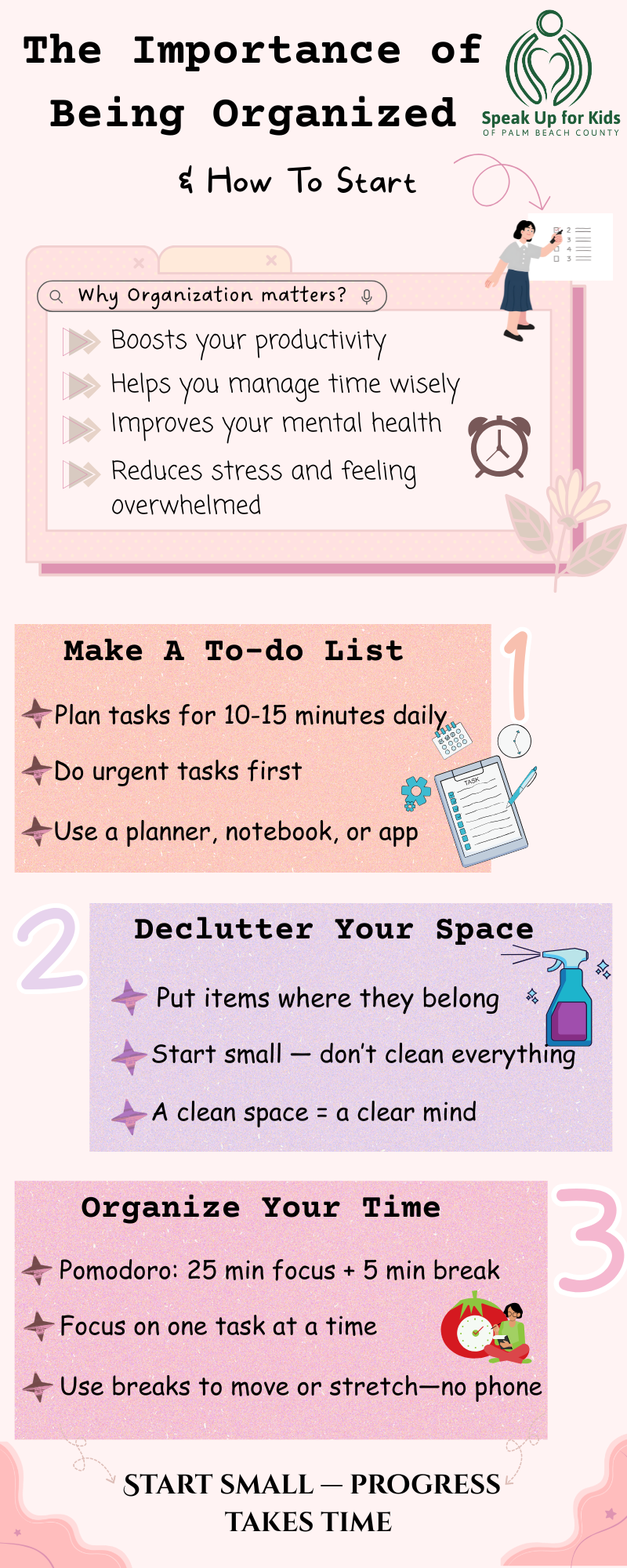
Before discussing how to get started, let’s take a look at the realistic benefits of having a more organized life.
It Boosts Your Productivity
When you are organized, you use your time more wisely, which results in increased productivity.
Here’s how:
When you determine which tasks are most important and focus on them first, you don’t waste time on tasks that are less urgent. This helps improve both productivity and time management.
It Improves Your Mental Health
When you step into your room and see socks, pens, notebooks, and blankets everywhere, it doesn’t make you think, “Oh! I should start cleaning.” Instead, it makes your brain feel overwhelmed, tired, and anxious. Cleaning and organizing your room regularly can make you feel happier and more proud of yourself. As the saying goes, “A clean room gives a clear mind.”
How to Actually Start Becoming Organized
Becoming organized may seem overwhelming, but as long as you believe in your progress, it becomes easier. Even taking small steps every day can change your life over time. Here’s how to begin:
Make a To-Do List
Every day after you come home from school—even if you’re tired—try to spend just 15 minutes making a realistic to-do list. Not a Pinterest or YouTube-style list, but something that actually works for you. If you prefer physical planning, use a notebook or planner. If you prefer digital tools, choose an app you like. Write down tasks that are urgent so you won’t feel rushed or overwhelmed the next day.
Declutter Your Environment
Getting into the habit of cleaning your room can be tiring, but it’s not impossible. When you come home from school or practice and step into a messy room, don’t lie on the bed. Saying you won’t sleep never works—sleep always finds you when you’re tired. Instead, change into comfortable clothes and start small. Pick up the trash, gather dirty clothes (you don’t need to do laundry right away), and put items back where they belong. It feels very satisfying once you’re done.
Organize Your Time
All of these tips start with organizing your time. If you’re busy and can’t seem to find time for homework or activities you enjoy, try the Pomodoro Technique. Set a timer for 25 minutes and focus on just one task. Don’t multitask. As Johann Hari says, “Multitasking is a myth that fragments attention, reduces productivity, and harms deep thinking.” After 25 minutes, take a 5-minute break. Avoid scrolling on social media. Instead, stand up, stretch, drink water, or move your body. Repeat this cycle until you finish your to-do list. The Pomodoro Technique is one of the best tools for staying organized.
Final Thoughts
Being organized doesn’t mean you have to overwhelm yourself. We’re all human, and everyone wants to live a more organized life. Just don’t drain yourself trying to be perfect. All of these tips come from personal experience, and I believe they are important steps toward becoming more organized. Start small—progress may not be visible on the first day, but everything takes time and patience. Now that you understand the benefits of organization and how to start, take the first step. Believe in yourself and your progress—one day, you’ll thank yourself.