

Living Successfully With Roommates
Contributed by Speak Up for Kids Student Intern Team — This article was developed through the combined efforts of multiple student interns, each bringing unique skills and perspectives to support life skills education for foster youth.
Overview
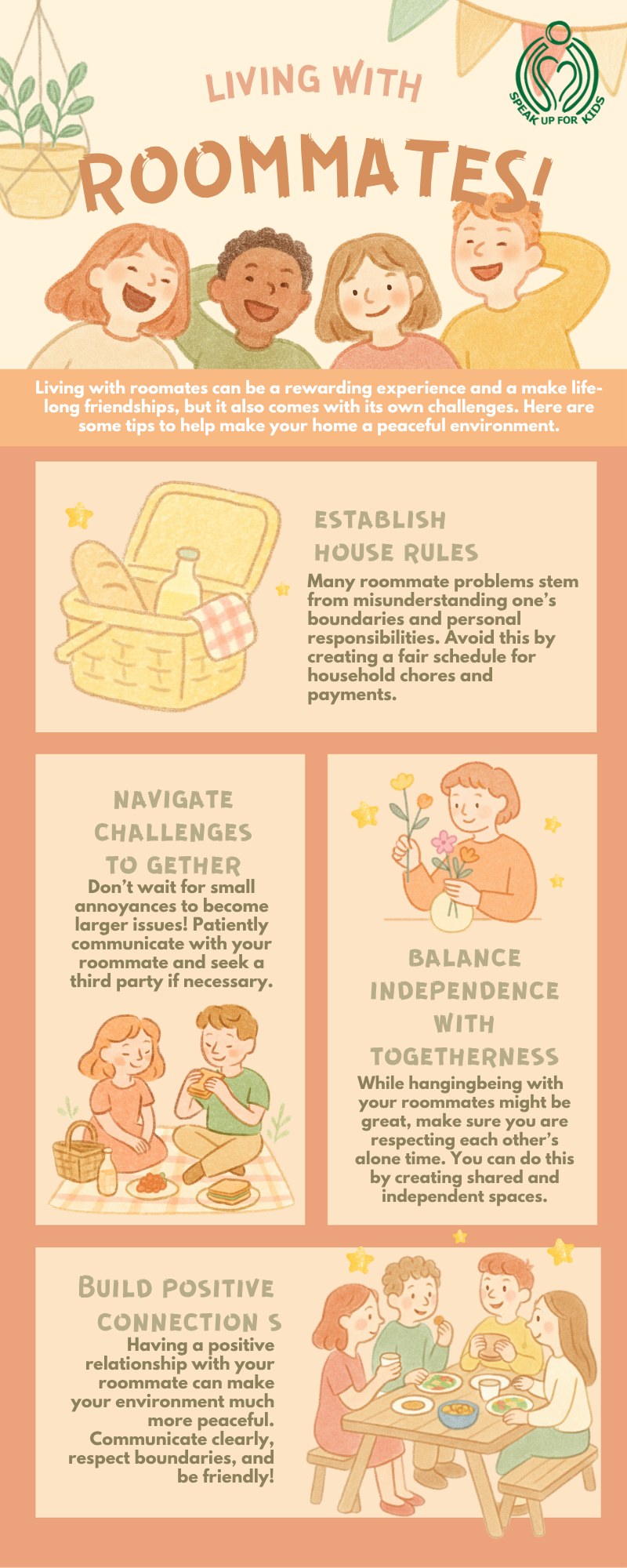
Living with roommates can be a rewarding experience, but it also comes with its own set of challenges. Whether you're sharing a dorm, an apartment, or a house, it's essential to establish a harmonious living environment. Here are some practical tips and tricks to help you get along well with your roommates and make the most of your shared living space.
Importance of a Good Roommate Relationship
Peaceful Living Environment: A positive relationship with your roommates contributes to a peaceful and stress-free home life.
Shared Responsibilities: Good communication and cooperation ensure that household chores and responsibilities are shared fairly.
Support System: Roommates can become a valuable support system, providing companionship and assistance when needed.
Building a Positive Roommate Relationship
Clear Communication: From the beginning, establish open lines of communication. Discuss expectations, house rules, and boundaries to avoid misunderstandings.
Respect Each Other’s Space: Respect your roommates' personal space and privacy. Knock before entering their room and avoid using their belongings without permission.
Be Friendly and Approachable: Be kind, friendly, and approachable. Small gestures like greeting each other or occasionally hanging out can foster a good relationship.
Establishing House Rules
Discuss Chores and Responsibilities: Create a fair schedule for household chores such as cleaning, taking out the trash, and doing dishes. Make sure everyone agrees on their responsibilities.
Set Boundaries: Discuss and agree on boundaries regarding noise levels, guests, and shared spaces like the kitchen and bathroom.
Agree on Finances: Be clear about how expenses like rent, utilities, and groceries will be split. Consider using apps or spreadsheets to keep track of shared expenses.
Maintaining a Harmonious Living Environment
Clean Up After Yourself: Respect shared spaces by keeping them clean and tidy. Don’t leave dishes in the sink or clutter in common areas.
Be Considerate with Noise: Keep noise levels reasonable, especially during late hours. Use headphones if you’re listening to music or watching TV.
Share and Compromise: Living with others often requires compromise. Be willing to share common areas and make adjustments to accommodate each other's needs.
Strengthening the Bond
Plan Roommate Nights: Occasionally, plan activities like movie nights or shared meals to strengthen your bond with your roommates.
Keep Open Channels for Feedback: Encourage open feedback. If something is bothering you, address it calmly and constructively.
Celebrate Together: Acknowledge and celebrate each other’s milestones, like birthdays or achievements. It’s a great way to build camaraderie.
Balancing Independence and Togetherness
Respect Alone Time: Everyone needs personal space and time alone. Be mindful of when your roommates need solitude.
Create Personal and Shared Spaces: Ensure everyone has their own space while maintaining inviting, comfortable shared areas.
Support Each Other’s Schedules: Be aware of each other’s routines, whether it's study times, work hours, or sleep schedules, and respect them.
Navigating Challenges with Roommates
Address Issues Early: Don’t let small annoyances fester. Address issues early on, before they become bigger problems.
Be Patient and Understanding: Everyone has off days. Practice patience and try to understand where your roommate is coming from during conflicts.
Seek Mediation if Needed: If you’re struggling to resolve issues on your own, consider involving a neutral third party, like a mutual friend or a resident advisor, to mediate.
Tips for a Smooth Coexistence
Be Punctual with Payments: Always pay your share of rent and bills on time. This prevents financial strain and tension between roommates.
Be Flexible with Shared Resources: Whether it’s the bathroom in the morning or the kitchen during dinner time, be flexible and accommodating with shared resources.
Keep Communication Positive: When discussing issues, focus on solutions rather than assigning blame. This approach fosters cooperation rather than conflict.
Conclusion
Living with roommates can be a positive and enriching experience when approached with respect, communication, and understanding. By establishing clear rules, sharing responsibilities, and maintaining open communication, you can create a harmonious and supportive living environment. Remember that patience, flexibility, and mutual respect are key to navigating the challenges of shared living. With these tips and tricks, you can build strong relationships with your roommates and enjoy a peaceful and cooperative home life.