

Things to Think About When Choosing Friends
Contributed by Speak Up for Kids Student Intern Team — This article was developed through the combined efforts of multiple student interns, each bringing unique skills and perspectives to support life skills education for foster youth.
Overview
Choosing friends is an important aspect of building a supportive and fulfilling social circle. The right friends can have a significant impact on your happiness, well-being, and personal growth. It's essential to consider various factors when choosing friends to ensure that your relationships are positive and mutually beneficial. Here are some steps and key questions to help you choose friends wisely.
Steps:
Assess Your Values and Interests:
Reflect on your core values and interests.
Identify what qualities and interests are important to you in a friendship.
Observe Interactions:
Pay attention to how potential friends interact with others.
Look for traits like kindness, respect, and empathy.
Consider Mutual Support:
Evaluate if the friendship offers mutual support and understanding.
Ensure that both parties are willing to give and receive support.
Look for Positive Influence:
Choose friends who inspire and motivate you to be your best self.
Avoid individuals who consistently engage in negative or harmful behaviors.
Test Compatibility:
Spend time together in different settings to gauge compatibility.
See how well your personalities and lifestyles align.
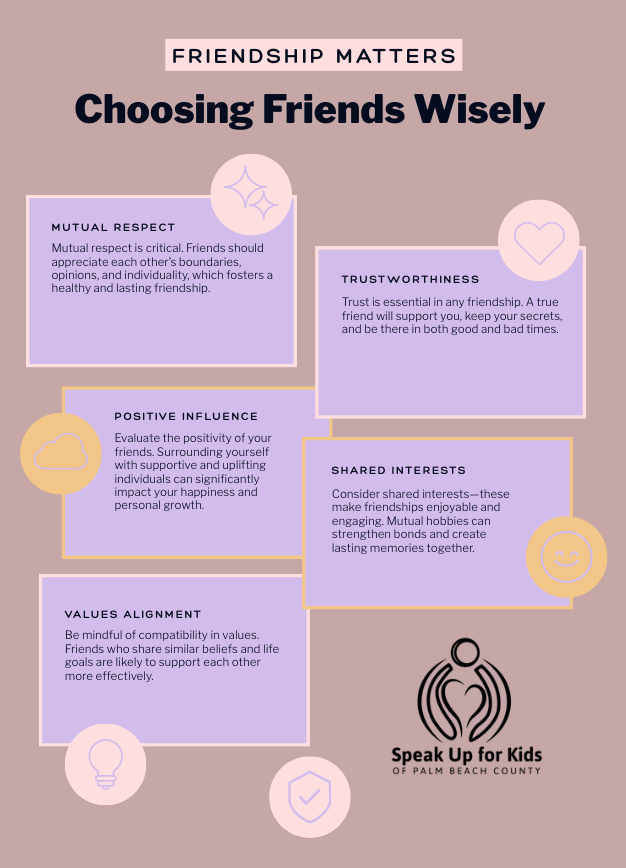
Key Questions:
Do We Share Similar Values?
Do our core beliefs and values align?
Are we on the same page regarding important life principles?
Do We Have Common Interests?
Do we enjoy similar activities or hobbies?
Can we engage in meaningful conversations and share experiences?
Are They Kind and Respectful?
How do they treat other people, including those they disagree with?
Do they show respect and consideration for my feelings and opinions?
Do They Support My Goals and Aspirations?
Are they encouraging and supportive of my ambitions?
Do they offer constructive feedback and celebrate my successes?
Do They Exhibit Empathy and Understanding?
Can they understand and relate to my emotions and experiences?
Are they willing to listen and offer support when I need it?
Do We Have Fun Together?
Do we enjoy each other’s company and have fun together?
Can we laugh and relax in each other’s presence?
Are They Reliable and Trustworthy?
Can I depend on them in times of need?
Do they keep their promises and maintain confidentiality?
Do They Positively Influence Me?
Do they inspire me to be a better person?
Are they role models for positive behavior and habits?
Is the Friendship Balanced?
Is there a balance of giving and receiving in the friendship?
Do we both invest time and effort into maintaining the relationship?
Can We Handle Disagreements Maturely?
How do we handle conflicts and disagreements?
Are we able to communicate openly and resolve issues respectfully?
Do They Respect My Boundaries?
Do they respect my personal space and boundaries?
Are they understanding when I need time alone or with other friends?
Do They Have a Positive Outlook on Life?
Are they generally optimistic and positive?
Do they handle challenges and setbacks with resilience?
Tips:
Quality Over Quantity: Focus on having a few close, meaningful friendships rather than many superficial ones.
Be Authentic: Be yourself when forming new friendships. Authenticity attracts like-minded individuals.
Take Your Time: Building strong friendships takes time. Don’t rush the process.
Mutual Effort: Ensure that both parties are willing to invest time and effort into the friendship.
Red Flags: Be aware of red flags, such as consistent negativity, manipulation, or lack of respect.
Final Thoughts
By considering these questions and steps, you can choose friends who will enrich your life, provide support, and contribute positively to your personal growth and happiness.