

To Know Thyself: The Value of Introspection
Contributed by Carlie Antoine — Speak Up for Kids Student Intern, a senior at Dreyfoos School of the Arts majoring in Strings, who enjoys art, drawing, crochet, reading, and exploring STEM subjects alongside music studies.
Overview
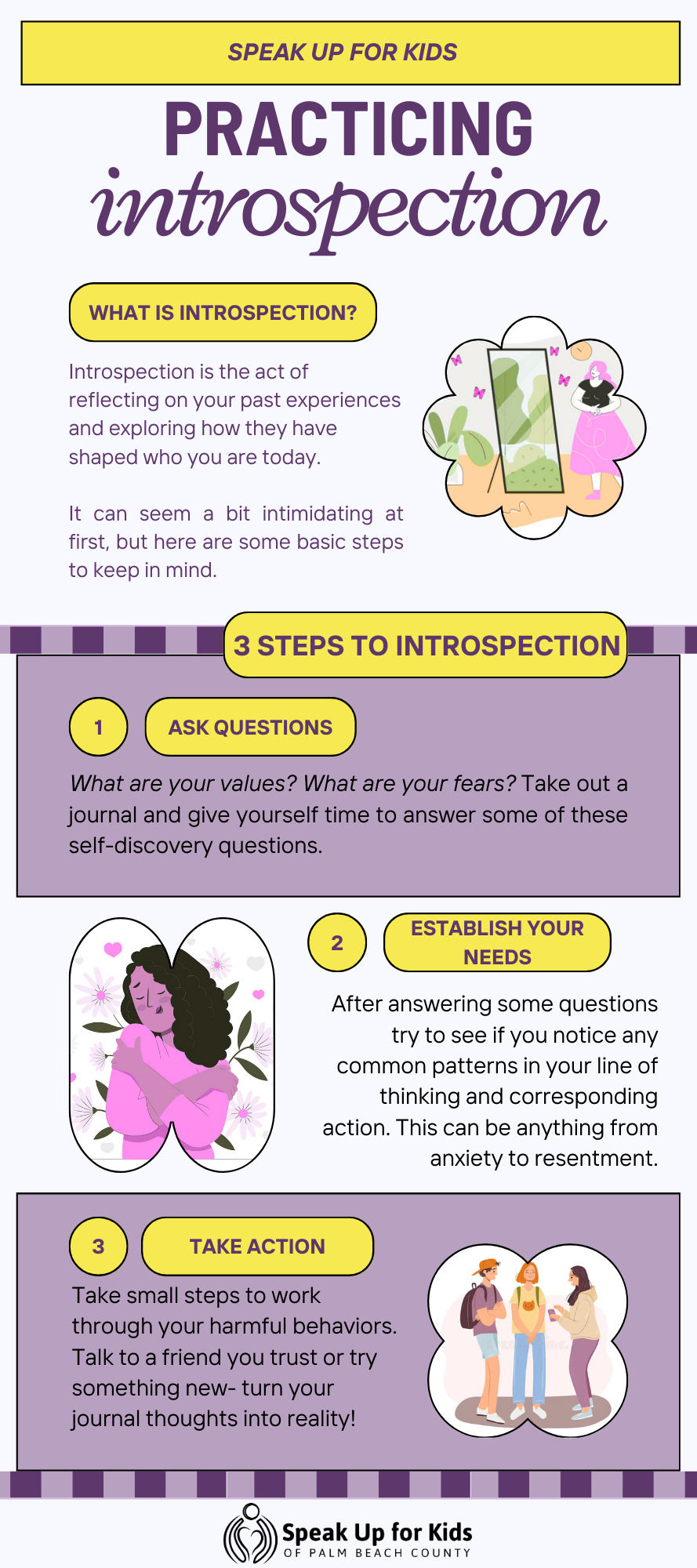
Some people say that hurt people hurt people; the cartoon school bully is often revealed to also have been bullied at some point in their lives. In the same way, the experiences and struggles we have dealt with in the past play a major role in how we perceive and interact with the world. However, it is only through reflecting on these experiences that we can truly understand the why behind our actions. The process of doing so is called introspection, and in this article, we will discuss why harnessing this skill is so important.
Benefits of Introspection
There are several benefits that come with learning how to practice introspection daily. These include:
Self-reflection: Introspection gives you the chance to explore more about your thoughts and feelings. This can even foster feelings of self-compassion as you learn to give yourself grace for some of the behaviors you may engage in.
Pattern recognition: Oftentimes, the harmful behaviors that we constantly find ourselves repeating have a source. As you introspect, you have the opportunity to learn the why behind your actions, heightening your self-awareness.
Improved confidence: Knowing why you behave a certain way can help you feel in control of your emotions and how you respond to certain situations. In doing so, this can greatly improve your sense of confidence and the way that you approach the world.
How to Get Started
Okay, so we’ve established that introspection is an important skill, but how can we even get started? Here are a couple of steps to keep in mind:
Ask questions
Asking self-discovery questions is a great way to learn more about your feelings and, most important, the why behind them. Find a quiet a place, take out a journal and your favorite pen, and answer some of these questions:
How do I respond to stressful situations? What are my coping mechanisms?
What am I avoiding in life? What might happen if I choose to face these things head-on?
What are my values? What small steps can I take to ensure that my behaviors align with these values?
Establish Your Needs
Now that you have answered some questions regarding your behaviors and their corresponding emotions, try to find some commonalities amongst them all. Maybe anger seems to play a major role in your decisions, or perhaps your thoughts have a universal theme of anxiety. Whatever the case, write down some major issues in your line of thinking or behaviors that you might want to address.
Take action
Introspection is only half of the battle- the true benefits come from stepping into the real world and working through our harmful behaviors. This can include anything from talking to a close friend or therapist about your struggles to staying away from environments that trigger certain patterns. Don’t feel afraid to start small!
Beware of Rumination
While introspection is a valuable tool you will learn to use throughout your life, it is easy to fall into the deadly trap of rumination and get trapped inside a never-ending cycle of your feelings. This loophole often only makes you feel more overwhelmed and self-conscious about your habits rather than empowered to work on them.
This is why establishing your needs and taking action is so important; it forces you to branch outside of your journal and encourages you to bring your insights into the real world. Introspection can sometimes shed light on the negative emotions that you have been hiding away. Hence, rather than dwelling on the past, it is imperative that you look towards the future and determine how to learn from these experiences. Connecting with a person you trust can be a great outlet for doing this!
Final Thoughts
All in all, introspection is a great way of learning more about yourself and your behaviors. Through this practice you can explore how your past experiences have molded you into the person you are today, giving you the insight you need to recognize many harmful patterns in your actions.
However, with great power comes great responsibility; learning more about yourself is invaluable, but true freedom comes when you use this knowledge to actively make a change in your life. That way, you can truly reap all of the benefits this practice has to offer while avoiding the deadly trap of rumination.
I wish you luck on your journey to self-discovery!